
Shimano’s XT groupsets have always been the dependable middle child – slightly heavier than XTR, a little less glamorous, but famously reliable and far more attainable. With the release of XT Di2 Wireless M8200-series drivetrain, Shimano has brought that ever-reliable middle child into the trail riding sweet spot. After several months of riding, racing, and general trail abuse, I’ve had enough time on the drivetrain to look at its long-term performance.
The standout trait of XT Di2 is how fast and light the downshifts feel. A single press delivers an immediate, crisp response with very little lever effort – which is something we’re used to with Shimano drivetrains. Dropping gears under load – out of corners and into short pinches – is confidence-inspiring and impressively consistent. It’s classic Shimano in that sense – precise, predictable, and reliable.
Upshifting tells a slightly different story. While shifts are still accurate and reliable, they feel fractionally slower and noticeably more audible than downshifts. There’s more feedback through the drivetrain, both in sound and sensation. Riders familiar with SRAM Eagle AXS will likely recognise the slightly heavier character – downshifts feel a little more mechanical and less subtle than Shimano’s road Di2 and mechanical drivetrains. Whether that’s a negative or a positive will come down to personal preference, but it’s a clear part of XT Di2’s personality.
One of the most talked-about design decisions with XT Di2 Wireless is the absence of a clutch. Instead, it uses a dual-spring set-up that also enables the drivetrain’s Automatic Impact Recovery Function in case of derailleur strike. Shimano has long relied on clutch-equipped derailleurs to keep chains quiet and controlled, so its omission is noticeable.
On smoother trails, the dual-spring system behaves well enough. But once the speed picks up and the trail turns rough, chainslap and drivetrain noise become more audible, and this was particularly obvious during testing on a super-stiff trail hardtail, where there’s no rear suspension to help dampen impacts.
It’s likely less pronounced on a full-suspension trail or enduro bike, but riders who value a silent drivetrain will notice the difference. The upside is simplicity and weight saving; the downside is less chain control and more noise when things get wild.
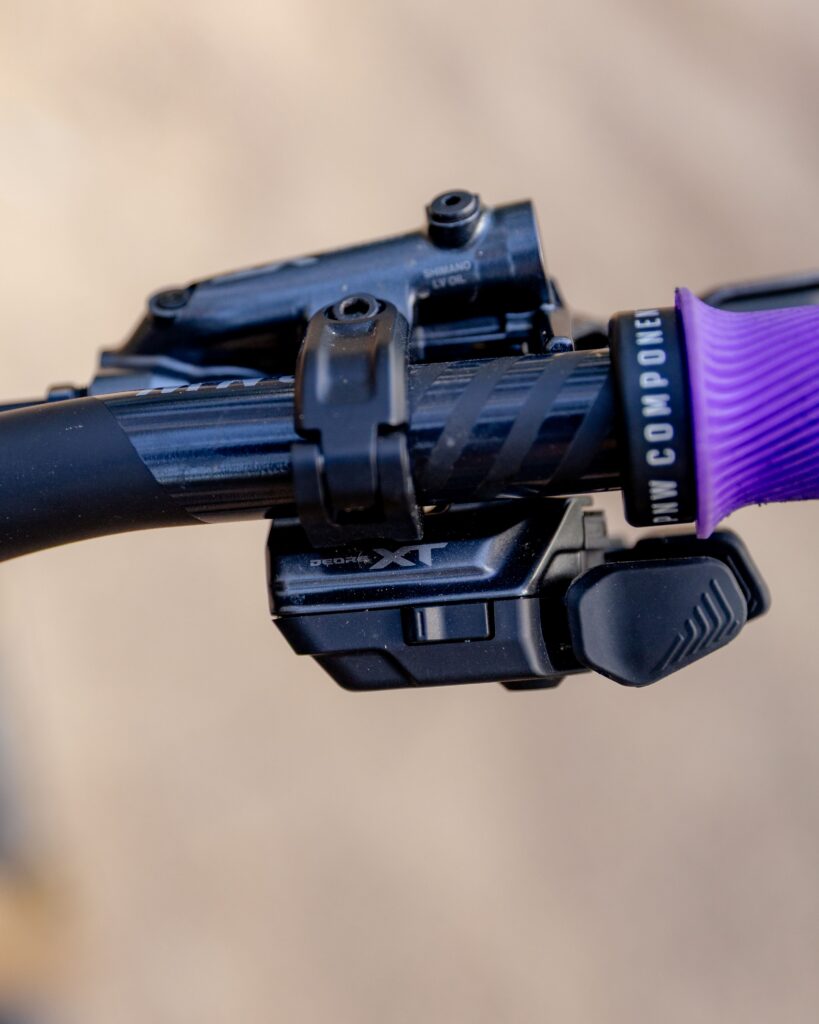
One area where Shimano absolutely nails it is the Di2 switch ergonomics. The shifter offers multiple axes of adjustment, allowing you to fine-tune position far more than with a traditional mechanical shifter. Once dialled, the controls feel natural, intuitive, and easy to operate even when fatigued.
However, when paired with I-Spec brake lever integration, that adjustability does have limits. While you can tweak reach, rotation, and lateral position, the brake lever mount itself caps how far you can go. Riders with very specific ergonomic preferences may find they can’t quite achieve a perfect setup, though for most, it’ll be close enough.
Long term takeaways riding on Shimano XT Di2
After extended time on the trail, Shimano XT Di2 Wireless proves itself as a highly capable, modern drivetrain that delivers excellent performance where it matters most. Downshifting is fast and effortless, the system is consistent across conditions, and the switch ergonomics are among the best (or maybe…the best?) in the business.
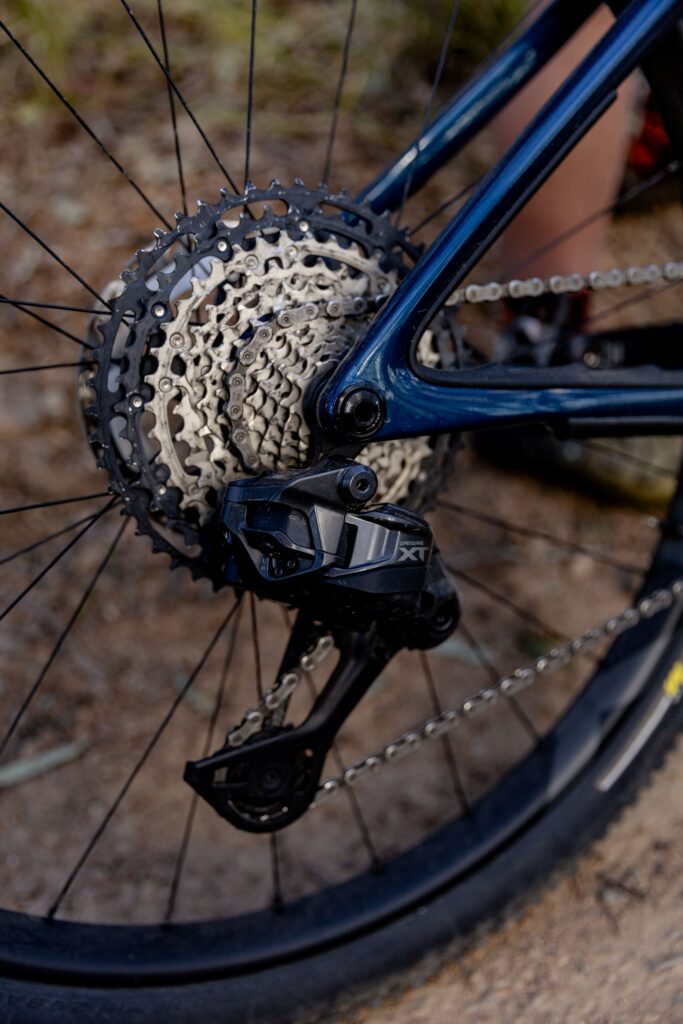
That said, it’s not without compromise. Upshifts have more audible feedback than some riders will expect, and the lack of a clutch means more noise and chainslap on rough descents – something that stood out clearly on a stiff hardtail test bike.
That being said, the dual-spring system has likely been working overtime during small impacts without me even noticing, the unit’s battery life is long enough for even the most endurance-orientated cyclist (though if you’re an ultra-endurance bikepacker – take a charger), and the drivetrain has required next to no maintenance in the six-month test period.
For riders looking to step into electronic shifting without the XTR price tag, XT Di2 Wireless makes a strong case, and is available as an upgrade kit for those using Shimano’s 12 speed mechanical drivetrains. It rewards aggressive trail riding with precision and reliability, as long as you’re willing to accept a little more drivetrain noise along the way.
Pros
- Exceptionally swift and light downshifting, even under load
- Consistent, reliable electronic performance across long-term testing
- Highly adjustable Di2 switches with excellent ergonomics once dialled
Cons
- Upshifts are slightly less swift and more audible than downshifts
- No clutch results in increased chainslap and drivetrain noise on rough terrain
- I-SPEC integration limits switch angle despite multi-axis adjustment