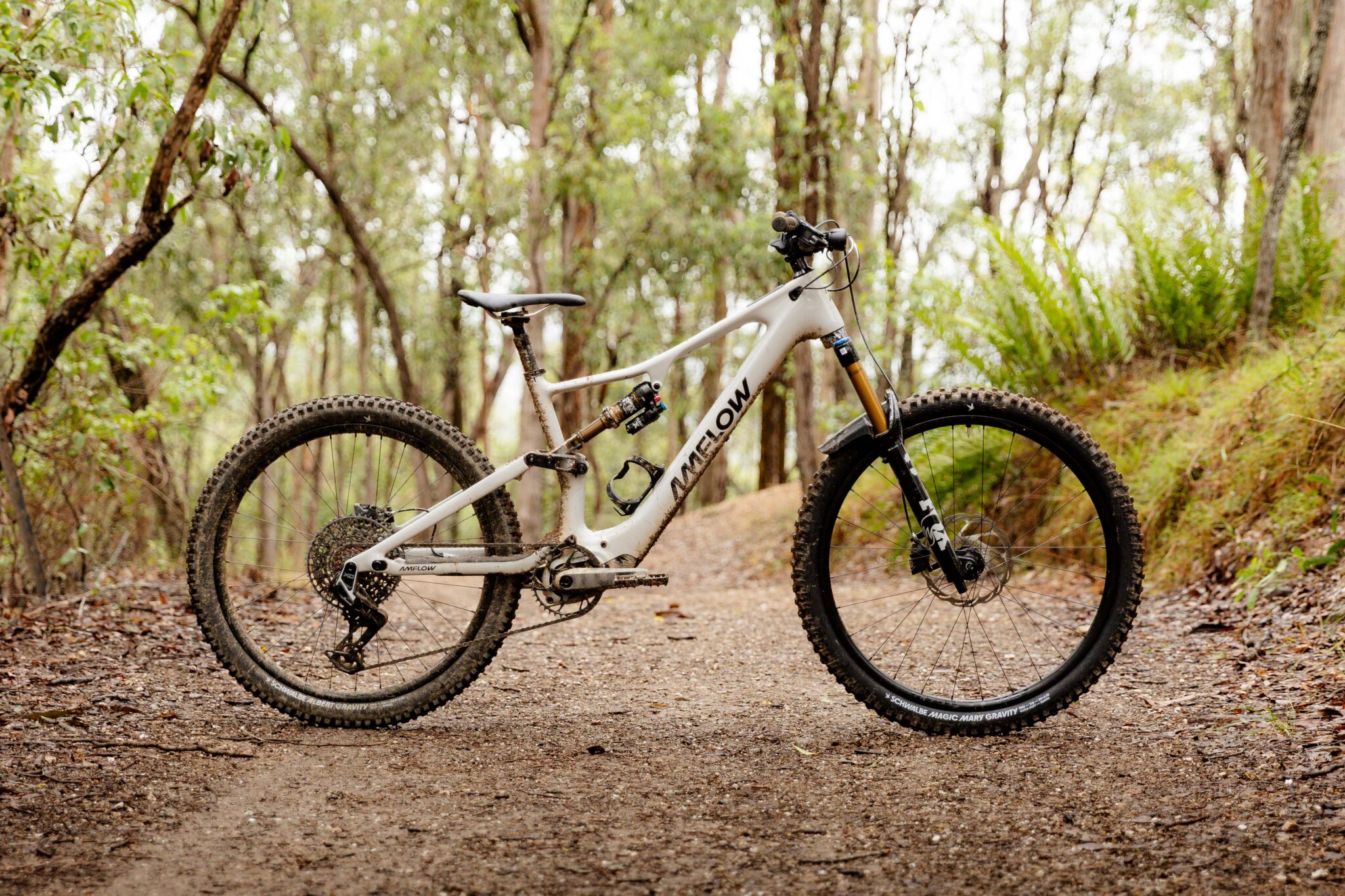
Amflow PX Carbon Pro Features 1500w & 130nm
Amflow have shown they’re here to stay with the launch of the PX and PR
Reviewed by Cameron Allonby | Photography by Clancy Kelly
Amflow set the e-bike world on fire when they landed the Amflow PL in Australia last year, with the Avinox M1 motor blowing other manufacturers out of the water when it came to power and torque output. The one aspect of the Amflow package that wasn’t exactly blowing minds was the more conservative lines and geometry of the full 29” PL frame. While it was a fine bike to ride, it wasn’t reinventing the wheel, and some riders could argue it was beginning to lag slightly behind the rapidly evolving geometry trends of the modern trail and enduro market.
Watch the video review
Fast forward to 2026 and Amflow have shown they’re here to stay, launching two new models — the PX and PR — featuring more aggressive and adjustable geometry, mixed wheel setups, and the pièce de résistance: the brand-new, earth-shattering Avinox M2S motor system.

We landed a fresh Amflow PX Carbon Pro in the AMB workshop. As an existing owner of an Amflow PL Carbon Pro, I was particularly interested to see how it compared. Is the new Avinox M2S really that much better? And how does Amflow’s reworked trail/enduro platform actually perform on the trail? I was eager to find out.
Initial Impressions
The drop of the Amflow PX and PR models and the new Avinox M2S motor earlier this year showed the world that the brand isn’t here to frolick with spiders — they’re the real deal, but more on that later.
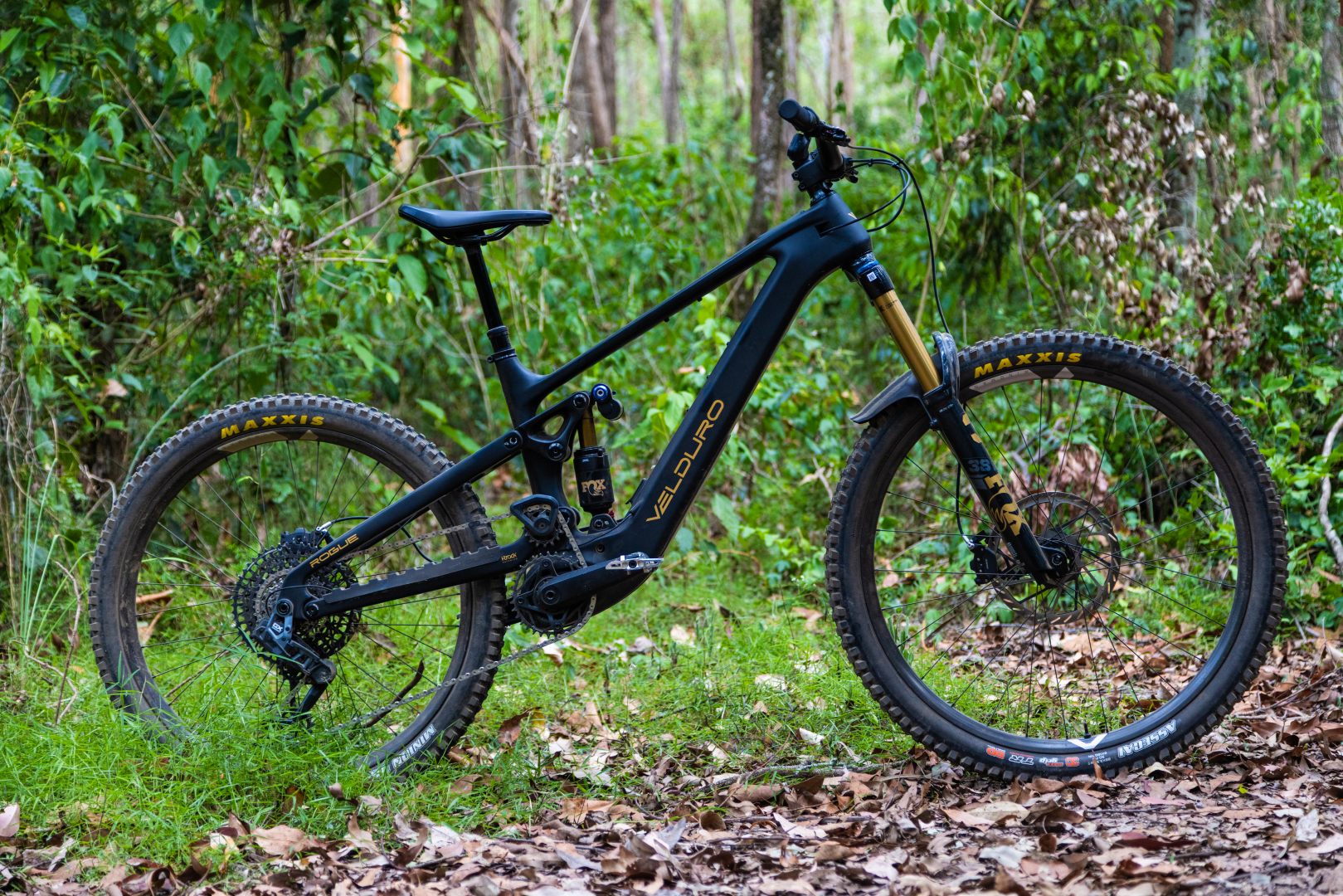
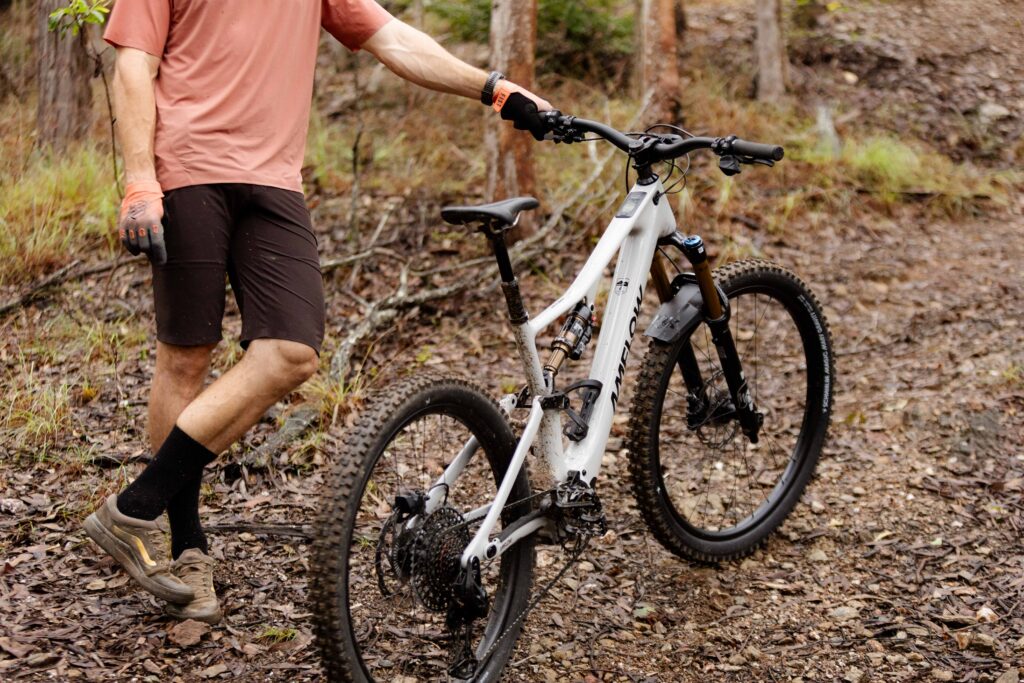
The Amflow PX platform is based around a mixed-wheel configuration, with the battery integrated into the downtube and three modes of geometry adjustment resulting in a staggering 40 possible geometry configurations. Size XL — our test bike — features a 503mm reach, 64.2º head tube angle and 78º effective seat tube angle. On paper, these numbers sit very close to the Santa Cruz Vala and are a smidgen slacker than the Specialized Turbo Levo 4 — geometry that suggests the PX should feel composed and aggressive on trail.

The three adjustment points include headset cups that alter head angle by 0.5º and 1º in either direction, bottom bracket height adjustment via a linkage flip chip between 345mm and 349mm, and a four-position chainstay adjustment that also allows the PX to be converted into a full 29er. Forty setup options should be enough for any terrain imaginable, although the obvious question remains — are 40 options actually too many?
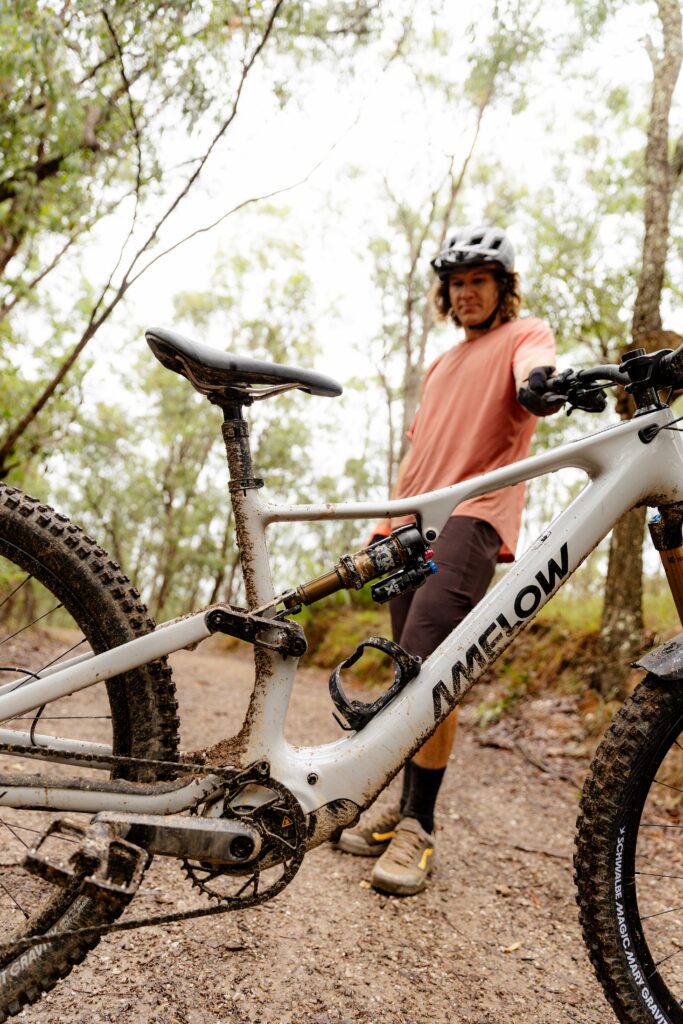

Weight-wise, the PX also blows many brands out of the water. The 2.4kg frame is paired with the 2.59kg Avinox M2S drive unit and 3.18kg integrated 700Wh battery for a claimed total weight of just 21.4kg — territory occupied by SL e-bikes only a couple of years ago.
Then there’s the motor.
The new Avinox M2S drive unit arrives with some genuinely impressive numbers. Delivering up to 1500W of power and 130Nm of torque, with a Boost mode capable of providing up to 60 seconds of assistance at 1500W and 150Nm. Just as impressive is the fact that all of this comes from a remarkably compact 2.59kg drive unit.
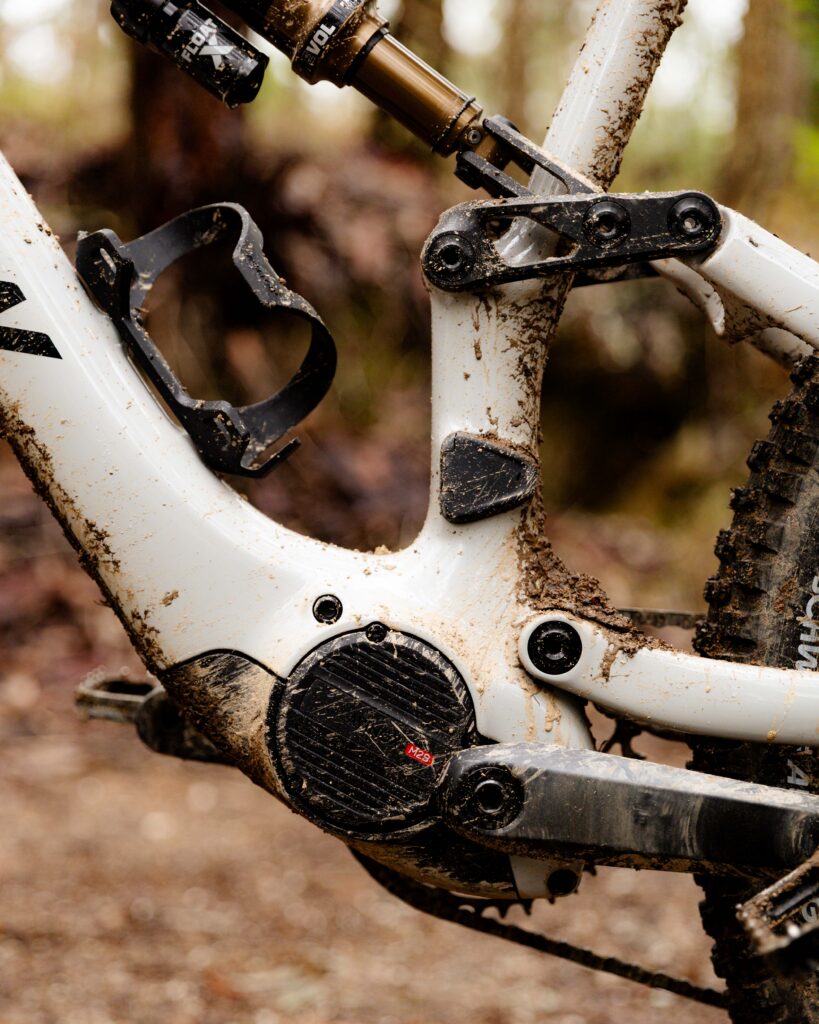
On trail, the power delivery is more impressive than the numbers themselves. The M2S is exceptionally smooth, predictable and highly tuneable. Riders can customise support levels to suit everything from relaxed trail rides to steep technical climbs, while the motor remains intuitive and easy to manage. Assistance builds naturally, traction is easy to manage, and the bike never feels abrupt or difficult to control. The result is a ride experience that feels refined, comfortable and accessible, regardless of how much support the rider chooses to use.
Noise levels are impressively subdued too. There’s still the familiar electronic hum under load, but it lacks the harsh mechanical clatter some high-output motors produce when pushed hard. Combined with the bike’s relatively low weight, the entire package feels refined.
The integrated 700Wh battery also deserves mention, not only because of its respectable capacity, but because of the charging system paired with it. Amflow supplies the bike with a 12A/508W fast charger that dramatically cuts downtime between rides. For riders smashing out multiple laps or back-to-back sessions, that’s a genuinely practical advantage rather than a gimmick. With 0–80% charge taking roughly 1 hour and 15 minutes, and a full 0–100% charge around 1 hour and 45 minutes, topping the bike up over lunch or between rides becomes a realistic option for riders chasing bigger days in the saddle, rather than an overnight commitment and a prayer to the power outlet gods.

The battery itself is integrated which will certainly create headaches for riders planning to fly with the bike, but for everyday riding and charging convenience, the fast-charge system is seriously impressive and makes the fixed battery a non-issue.
Then there’s the IoT side — something that initially feels a little strange in a mountain bike review, but quickly starts to make sense. Included in the box is a Nano SIM card, allowing the bike’s integrated connectivity features to operate independently of your phone. Through the Avinox app, riders can access live bike tracking, anti-theft functionality, ride syncing, remote system monitoring and over-the-air updates.
At first glance it feels slightly overkill — like your bike suddenly has better connectivity than your first mobile phone — but considering the price of modern e-bikes, built-in tracking and security features actually feel pretty sensible.
It’s also clear Amflow have thought carefully about the ownership experience beyond just the bike itself. Included with the PX Carbon Pro is a stem-mounted light, shock pump, torque wrench and Schwalbe Clik Valve conversion kit — small but genuinely thoughtful inclusions. The light is handy for late-evening rides or emergency trail-side visibility, while the torque wrench feels like a nod toward the realities of modern carbon bikes and high-spec components.
We have the Amflow PX Carbon Pro on test, retailing at $13,999, although the range also includes the PX Carbon model at $9,999. Key differences include frame layups, suspension, drivetrain, cockpit and wheel specifications, though both bikes feature the Avinox M2S system.
On The Trail
My first pedal strokes on this bike were accompanied by laughter. The power of this motor is incredible.
Coming off the previous Amflow PL Carbon Pro with the Avinox M1, I was sceptical about how much difference this additional power would actually make given the 25km/h assistance limit. How wrong was I? This thing is an absolute rocketship.
Despite the monstrous output, the motor delivers power smoothly, quietly and comfortably. Power modes are easily customised through the bike display, and if you’re not thrilled with the stock settings it’s incredibly easy to tweak things to suit your riding style.

I boosted Eco mode significantly for riding with friends on older e-bikes, while removing overrun from Turbo so my feet felt directly connected to power delivery — something I particularly enjoyed during hard “power hour” efforts, although it absolutely drains the battery. Outside of those specific use cases, the bike spent most of its time in Auto. Auto delivers excellent power and surprisingly good battery life, making it the sweet spot for everyday riding.
The reduced 700Wh battery is probably my biggest personal criticism of the bike. It’s good, but not great. The PX is so much fun to ride that it constantly tempts you into squeezing in one more lap, and I often found myself saying no purely to ensure I’d have enough charge to get home. A range extender is available, but personally I’d still love to see an 800Wh option return.
The bike itself is also impressively intelligent. GPS tracking, anti-theft functionality and connectivity features will excite the tech-minded riders among us, but importantly, all of these systems are intuitive and easy to use without becoming intrusive. Riders wanting a simple “charge and ride” experience can still happily ignore most of the smart features altogether.
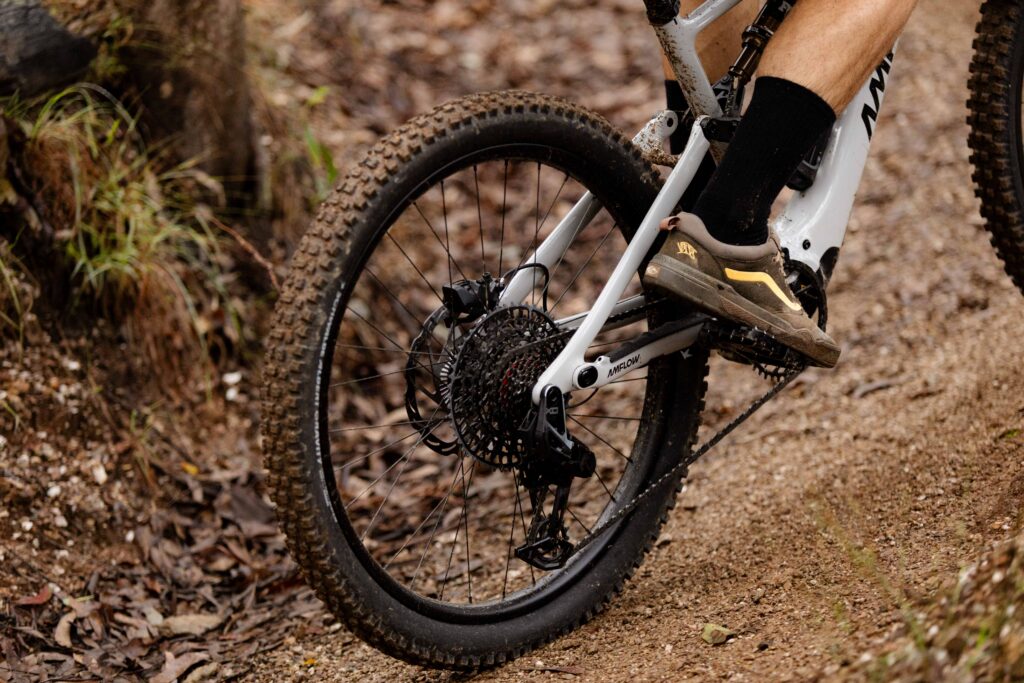
Moving from a 34T chainring to a 38T ring is also a smart decision. Cadence feels almost irrelevant on this bike — there’s so much power available that you can practically leave it in one gear and let the motor do the heavy lifting. That’s fantastic for technical climbs where small crank movements can deliver enough torque to crawl over almost anything. The downside is the lack of a bash guard around the 38T chainring. Poorly timed pedal strikes or awkward wheel lifts could easily result in a damaged chainring or snapped chain.
Out of the box, this bike is honestly a bit of a handful. The chainstay ships in the short setting at 438mm, which is incredibly compact for such a powerful bike. The short rear end removes a huge amount of front-wheel traction on climbs. Descending felt manageable, but keeping the front wheel on the ground while climbing required serious effort.
Switching the flip chip to the long 451mm setting transformed the bike entirely. Suddenly the PX became an incredibly balanced all-round weapon.
While the 40 available geometry configurations are impressive on paper, realistically most riders will never touch the majority of them. The long chainstay setting, however, feels essential for maintaining climbing composure and should probably be the default choice for most riders.
The mixed-wheel setup is a huge improvement over the previous PL platform. It shifts the PX from being a great trail bike into a genuinely aggressive gravity machine. It’s also nice to see Amflow move from straight-pull spokes to J-hook spokes. I regularly broke straight-pull spokes on the previous bike but haven’t had a single issue with the J-hook setup so far.

The hubs are extremely loud though, which may or may not be your thing.
The Schwalbe radial tyres are another interesting talking point. Some riders find radial tyre construction vague or wallowy on descents due to the softer carcass feel. Initially I felt the same way. However, the immense climbing capability of this bike completely changed my perspective. Full-power seated technical climbs become a genuine highlight on the PX, and the more supple tyre profile smooths out trail chatter beautifully during those efforts. Overall, the pros and cons level out and you’re riding a well performing bike.
Despite including Schwalbe’s Clik Valve conversion kit, the bike didn’t actually arrive with tubeless valves installed, meaning the kit wasn’t immediately useful. Once I installed valves and converted the setup tubeless, sealing was straightforward despite the stock rim tape initially looking a little questionable.
Magura provide the stopping power with their monstrous Gustav Pro four-piston brakes paired to huge 2.5mm rotors. These rotors now integrate the speed sensor for the Avinox system, meaning riders looking to swap rotors later will also need to source a separate wheel speed sensor.
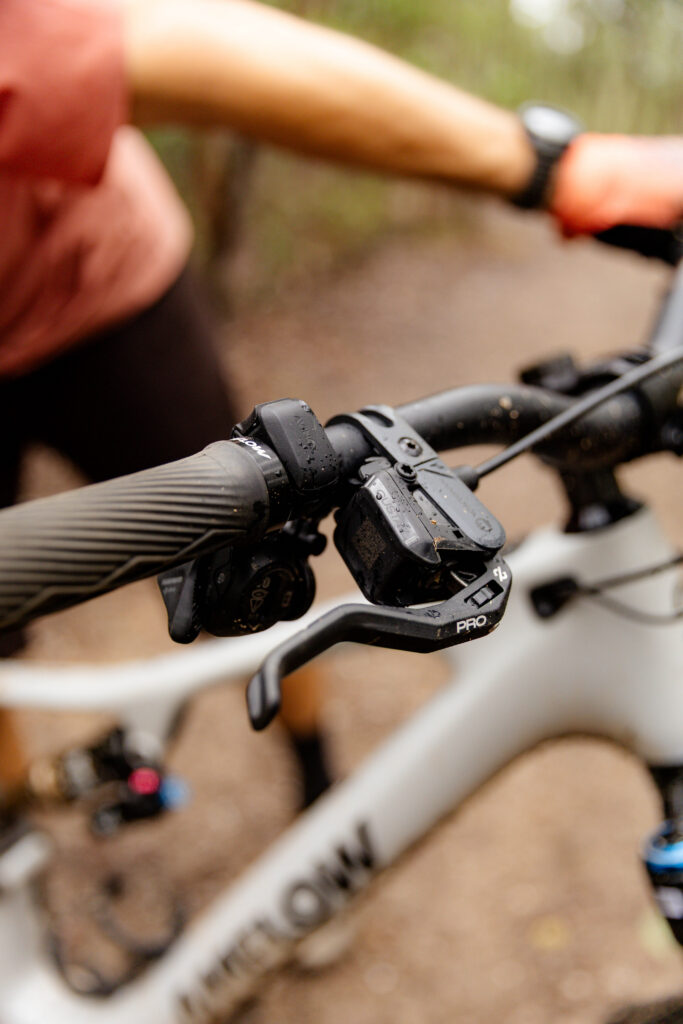
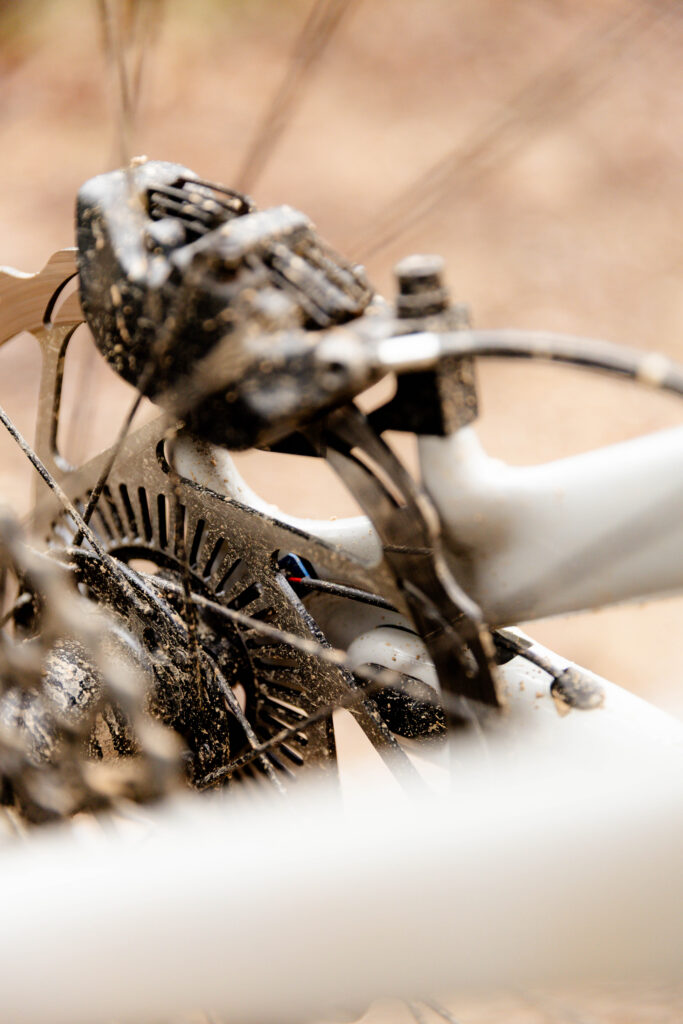
Brake performance is powerful, reliable and confidence inspiring, which is important given the speed this bike is capable of generating. However, the stock pads lack bite and don’t quite match the potential of the rest of the system. Fortunately, Magura offer grippier pad compounds and swapping them over immediately lifts braking performance.
The tool-free reach adjust is also a nice addition, allowing riders to fine tune lever position on the fly. Unfortunately, the adjustment dial itself often requires arms like Popeye to turn, making it less user-friendly than it should be.
Suspension and drivetrain duties are handled by premium Fox and SRAM components. All the products perform exceptionally well and contribute to the PX feeling like a genuinely premium package.
Amflow also provide their own bars, stem, grips, cranks, saddle and seatpost. The saddle itself is comfortable but creaky — probably not a major concern as many riders will swap saddles anyway. The revised grips are dramatically improved over the previous generation and provide a comfortable, tacky feel. The new stem is another welcome improvement which is far sturdier than the previous design.
The 210mm dropper on the XL bike is excellent for taller riders, particularly during long fire road climbs. I still can’t keep the Amflow cranks tight though. On my Amflow bikes, all have required regular torque checks despite generous applications of Loctite.
The most frustrating part of the bike surprisingly became the water bottle setup. Initially the integrated cage looked clever and well thought out, but changing to a side-loading cage quickly revealed how proprietary the system really is. The downtube shape requires Amflow’s recessed bottle design for proper shock clearance, and the stock mounting bolts were so short that one barely engaged the threads at all. For now I’ve returned to the stock setup simply because I don’t want to ride with a backpack.
Our Take
The Amflow PX Carbon Pro is an absolutely outrageous e-bike.
The Avinox M2S motor is genuinely game changing. The power delivery, refinement, low weight and fast charging combine to create a riding experience that feels like a genuine leap forward rather than another incremental update. It climbs technical terrain with ridiculous ease, accelerates like almost nothing else on the market and somehow still manages to feel composed and manageable while doing it.
What’s most impressive though is how broad the bike’s performance window is. Riders of wildly different skill levels can jump aboard and immediately have fun. It feels light, playful and easy to control at slower speeds, yet still has the geometry, suspension and power to absolutely charge once the trail gets rough and speeds increase.
At 160/150mm travel, the PX walks a really impressive line between aggressive trail bike and full-blown gravity weapon. The move to mixed wheels, beefier frame hardware and more progressive geometry makes the bike feel dramatically more refined than the previous PL generation. It no longer feels like an ambitious newcomer trying to prove itself — it feels like a genuine market leader.
The fast charging is brilliant. The low weight is hugely impressive. The smart features are genuinely useful rather than gimmicky. And despite the immense power output, the bike still feels polished and surprisingly intuitive to ride.
40 possible configurations available through chainstay, linkage, headset and bottom bracket adjustments, riders have an enormous amount of scope to tailor the bike to different terrain, wheel configurations and personal riding preferences. While many riders will likely settle on a preferred setup and leave it there, it’s impressive to see a manufacturer offer this level of flexibility. More importantly, the adjustments deliver meaningful changes to the bike’s handling. For me, moving the chainstay into the longer setting transformed the PX into a more balanced and composed machine, particularly on steep climbs where front wheel traction became noticeably easier to manage.
The 700Wh battery will also divide opinion. For many riders it’ll be plenty, but because this bike encourages you to ride harder, climb more and squeeze in extra laps, it’s easier than expected to find yourself wishing for more capacity.
Still, these complaints feel relatively minor when viewed against the bigger picture.
Amflow haven’t simply built another good e-bike — they’ve built one of the most exciting e-bikes currently available. The PX Carbon Pro feels fast, refined, fun and unapologetically modern. More importantly, it feels like a glimpse into where high-performance e-mountain bikes are heading next.