
In the beginning, before e-bikes, anti-squat and wheel size wars, there were clunkers. Steel was king and so were jeans, handlebars were almost as wide as the moustaches. The pioneers took those clunkers to the top of Mt Tamalpais, California and the bicycle world was never the same again.
The first mountain bikes were not invented so much as discovered – bikes dragged out of sheds, repurposed from paper routes, and pushed to places bicycles were never meant to go.
Those early riders in Marin County didn’t set out to create a new cycling discipline. They simply wanted to get to the top of hills and bomb back down as fast as possible. In doing so, they triggered a technological and cultural chain reaction that would eventually reshape cycling entirely.
While I officially classify as old (50+), I must admit I wasn’t around for the primordial emergence of mountain bikes from the foothills of Marin County. I have, however, been riding and racing mountain bikes for over three decades, long enough to have lived through several generations of the mountain bike. That’s long enough to notice that mountain biking didn’t arrive through clean design decisions or linear progress. It evolved through variation, failure, selection, and eventual dominance.
To understand where we are now, we need to look not just at history, but at how technology spreads, why certain standards survive, and why others quietly disappear.
The Earliest Phase: Innovation Without Intent
In evolutionary terms, the 1970s were the mutation phase.
The original clunkers were crude but resilient. Heavy steel cruiser frames, balloon tyres, coaster brakes, and single speeds were not chosen because they were optimal, but because they were available. The paperboy bike mattered not because it was good, but because it was cheap, plentiful, and sacrificial.
This is a classic pattern in early technology adoption. Innovation begins not with purpose-built tools, but with whatever can survive experimentation. These bikes were modified repeatedly – reinforced frames, motorcycle brake levers, better hubs – each change a small mutation tested against gravity and terrain.
Wheel size was not a debate. Twenty-six inches simply existed as a result of tyre access. Headsets were threaded because everything was threaded. Frames were steel because nothing else made sense. The constraints were absolute, and creativity happened inside them.
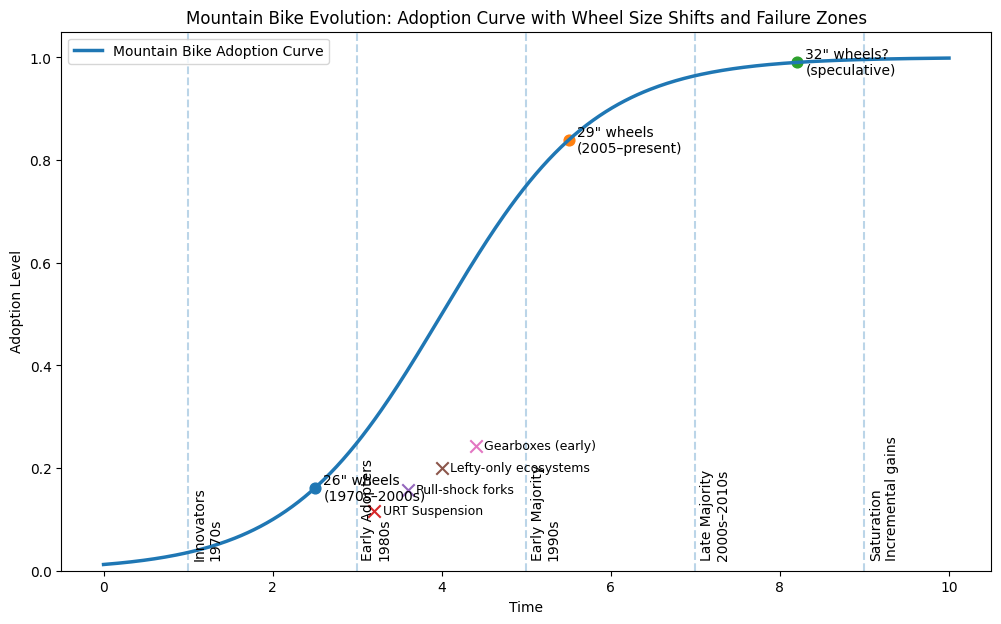
On the adoption curve, this phase sits firmly with innovators: a tiny population willing to accept discomfort, failure, and ridicule in exchange for novelty and capability.
The 1980s: From Mutation to Species
The 1980s marked mountain biking’s transition from experiment to identity.
As soon as riders realised that off-road riding wasn’t a novelty but a repeatable activity, the first true mountain bike frames emerged. Builders like Joe Breeze and Tom Ritchey abandoned cast lugs in favour of mitred and brazed tubing, because mountain bikes required geometries that road bikes simply couldn’t provide.
This was a pivotal technological shift. Once geometry was no longer constrained by road traditions, mountain biking became its own species rather than a variant.
Frames remained steel, but tube selection became intentional rather than accidental. Strength was prioritised over elegance. Threaded 1” headsets remained universal, not because they were ideal, but because there was no selection pressure yet strong enough to displace them.
Commercialisation followed quickly. The Specialized Stumpjumper wasn’t revolutionary because of its technology – it was revolutionary because it validated the category. The sport moved from innovators to early adopters, and the S-curve began its first meaningful rise.
The 1990s: Rapid Growth and Violent Learning
If the 1980s were about definition, the 1990s were about acceleration.
This decade represents the steepest part of the adoption S-curve, where growth compounds faster than understanding. Mountain biking exploded in popularity, racing gained legitimacy, and manufacturers raced to meet demand with technologies that were often underdeveloped.
Suspension moved from novelty to expectation. Front forks gained travel, rear suspension designs multiplied, and suddenly frames were being asked to do things they had never done before. Failure rates were high, but failure was tolerated because the market was growing faster than refinement cycles could keep up.
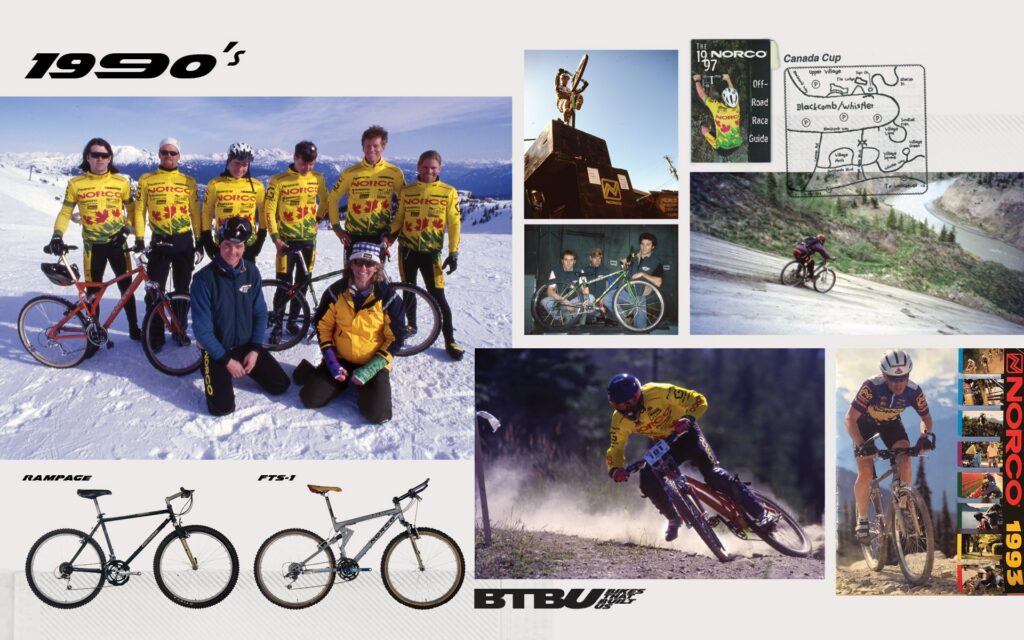
Aluminium surged during this period, driven by weight reduction and manufacturing scalability. Early aluminium frames cracked frequently, but the solution was evolutionary rather than philosophical: increase tube diameter. Larger tubes compensated for lower material density, improving stiffness and fatigue life.
This decade also saw the quiet but critical transition from threaded to threadless headsets. The 1⅛” Aheadset system wasn’t adopted because it was fashionable, but because suspension forks demanded greater torsional stiffness and easier adjustability. This was selection pressure in action.
Wheel size, however, remained static. 26” survived not because it was perfect, but because the ecosystem – tyres, rims, forks, geometry – was already built around it. Evolution rewards compatibility as much as performance.
Diversification Instead of Convergence
By the early 2000’s, something unexpected happened.
Instead of converging on a single ‘best’ mountain bike, the category began to aggressively diversify. This mirrors adaptive radiation in biological systems, where a successful organism spreads into multiple niches rather than perfecting one form.
Cross-country bikes prioritised efficiency and weight. Trail bikes became generalists. Downhill bikes abandoned climbing altogether. Later, enduro bikes emerged as a response to terrain and racing formats that rewarded descending without completely sacrificing pedalling.
Each category imposed different selection pressures. Geometry slackened where speed mattered. Suspension travel increased where impact absorption was critical. No single configuration could dominate all environments, so many survived.
This is a key reason mountain biking never collapsed into homogeneity. Diversity wasn’t a marketing strategy – it was an evolutionary necessity.
Headsets: A Microcosm of Technological Evolution
No component illustrates uncontrolled evolution better than the headset.
From the original 1″ threaded standard, the industry progressed through 1⅛″, oversized, integrated, zero-stack, external-cup, tapered steerers, and mixed-standard frames that required flowcharts to understand. Cane Creek’s S.H.I.S. system exists purely because nomenclature failed under the weight of variation.
This wasn’t chaos for its own sake. Suspension forks grew longer and stiffer. Head tubes had to resist greater leverage forces. Bearings needed to be larger and better supported. Each new standard solved a real problem – but often created compatibility issues downstream.
In evolutionary terms, this is what happens when selection pressure is intense, and coordination is limited. Diversity explodes, some solutions stabilise, others quietly go extinct.
Wheels: The Slowest, Most Inevitable Shift
Wheel size evolution followed a different curve.
For decades, 26″ wheels persisted because changing them required rebuilding the entire system: frames, forks, geometry, tyres, and rider expectations. Early big-wheel experiments failed not because they were wrong, but because the ecosystem wasn’t ready.
Hybrids with their mountain bike flat bars, had 700C wheels for roadie efficiency. As the name ‘hybrid’ suggests, these were a cross breed between the establishment of road and the emergent mountain bike, foreshadowing gravel. They tried to colonise smooth back roads and light trails. The Neanderthals of the bike world withered, out competed, the growth it was in the mountains.
When 29″ wheels finally took hold, it was due to a combination of improved materials, better tyre construction, and suspension designs that could manage longer front centres. Gary Fisher’s contribution was less technical than cultural – he named the concept, legitimised it, and pushed it past the early adopter phase.
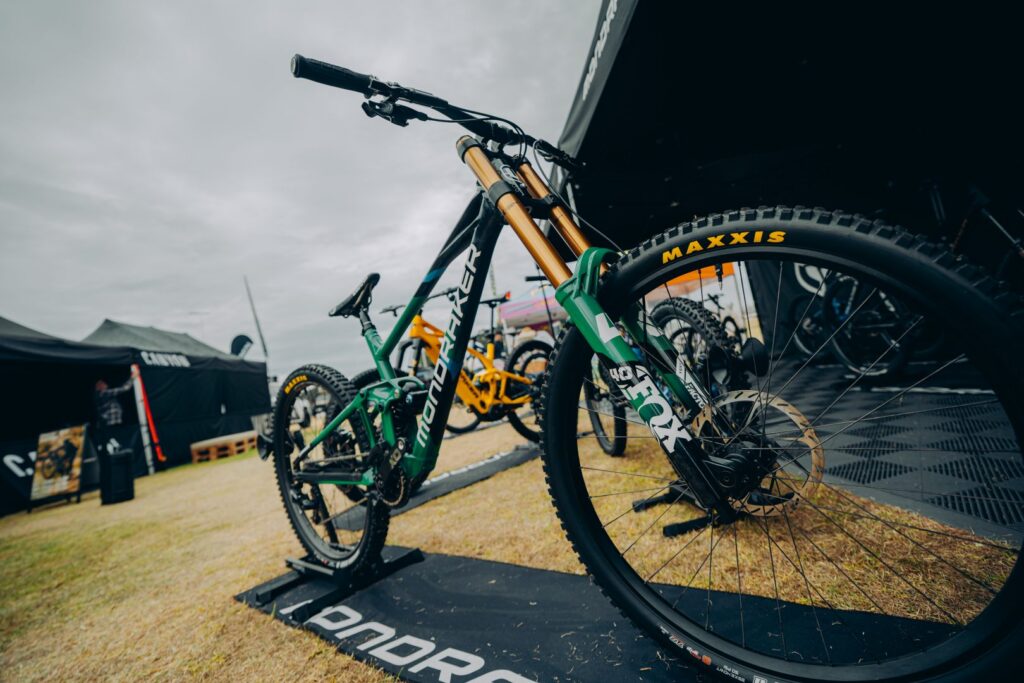
Once traction, rollover, and stability benefits became undeniable, adoption accelerated rapidly. Today, 29″ wheels dominate most categories, while 27.5″ survives in niches where agility and packaging matter.
This is a textbook delayed S-curve: long resistance, sudden acceptance, rapid dominance.
Materials: Old Ideas, New Tools
Material evolution appears linear at first glance – steel to aluminium to carbon – but reality is cyclical.
Steel never disappeared. It retreated into niches where compliance and durability mattered. Aluminium fell, returned via hydroforming, and now coexists with carbon rather than competing directly with it. Carbon dominates not because it is perfect, but because it allows engineers to tune stiffness, weight, and strength independently.
Additive manufacturing has reopened doors that were previously closed. Lugged construction, once abandoned for efficiency, is returning through 3D printed titanium nodes bonded to carbon or aluminium tubes. Atherton Racing’s frames feel both futuristic and deeply familiar, proving that evolution rarely discards ideas entirely – it shelves them.
Gravel: When Mountain Biking Walked Upright
A major twist in the evolution of off-road riding came not on rooty singletrack, but on gravel roads and fire trails.
In the 2010s, as mountain biking matured and many riders sought new challenges, a parallel movement emerged that borrowed from both road and mountain bikes. Gravel bikes took the adventure ethos of mountain biking, combined it with the efficiency of drop-bar road platforms, and applied it to terrain that was rough yet navigable.
Gravel bikes typically feature wider tyres than cyclocross bikes, relaxed geometry for stability over long distances, and frame designs that balance lightweight efficiency with durability. In evolutionary terms, they represent a niche expansion branching off from the parent stock that is road and mountain bike technology.

These machines are not mountain bikes, but they owe their existence to mountain biking’s embrace of terrain beyond pavement. Gravel demands versatility, resilience, and rider comfort over long days, and it has grown from fringe adventure to serious competitive discipline. On the adoption curve, gravel bikes have moved quickly from early adopters into the early majority, with their own S-curve forming alongside mountain biking’s.
Rather than competing with mountain bikes, gravel bikes have expanded the cycling ecosystem, creating a continuum between pavement and trail that invites riders from both ends of the spectrum.
The Present: Trails, Trends, and Electrification
From an adoption-curve perspective, traditional mountain biking is in the late-majority phase. The sport is mature. The technology is refined. Gains are incremental rather than revolutionary.

At the same time, e-bikes represent a new S-curve entirely – one that is still climbing rapidly. Electrification hasn’t replaced mountain biking; it has expanded the ecosystem, introducing new riders and new selection pressures.
This layered evolution explains why mountain biking feels simultaneously stable and chaotic. Mature technologies coexist with experimental ones. Old standards persist beside new ones. Diversity remains high because riding environments, values, and bodies remain diverse.
32″ Wheels: A Growth Too Far – or the Next Adaptive Shift?
Into this rich tapestry of wheels comes a provocative idea: 32″ wheels.
Ask whether they’re a ‘growth too far’ and you’re really asking: Are the selection pressures strong enough to sustain another shift?
The leap from 26″ to 29″ was not trivial. It required rethinking frame geometry, tyre design, rider position, and handling expectations. But the benefits – greater rollover, improved momentum, and better traction – were clear enough to overcome the inertia of legacy standards. That’s why the 29″ transformation succeeded: the advantage was significant and broadly applicable.

With 32″ wheels, the gains are more subtle. Rolling resistance may improve slightly. Obstacle clearance might edge up. But every millimetre added translates into challenges: increased rotational mass, packaging constraints for suspension linkage and forks, and potential handling compromises in tight terrain. Unless those theoretical benefits materially exceed what 29″ already delivers, there may not be enough ‘selection pressure’ for broad adoption.
This concept fits neatly into the technology adoption model. For a new standard to climb its own S-curve, it needs:
- Clear advantage over incumbent solutions
- Broad applicability across use cases
- Manufacturing and supply-chain support
- Cultural willingness to embrace change
At the moment, 32″ wheels flirt with 1, but struggle with 2 and 3. They may find a niche – just as 27.5″ did – where specific performance trade-offs are valued. Or they may remain a technological curiosity, like indexed shifting or 650B before it found broader traction.
If 32″ ever moves beyond early adopters, it will depend on real competitive advantage in specific disciplines, not novelty alone.
Conclusion: Mountain Biking as an Evolutionary System
We didn’t engineer the perfect mountain bike, it evolved into an ecosystem.
Mountain biking grew the way populations grow and technologies spread: slowly at first, then rapidly, then diversely. Variation radiates from a single point, from this diversity what worked survived. What didn’t vanish quietly went extinct from the ecosystem.
Gravel bikes, e-MTBs, and even speculative standards like 32″ wheels are not deviations from a plan. They are current expressions of a complex adaptive system, where riders, terrain, culture, and technology co-evolve.
The growth rate of mountain biking has plateaued and we have entered an era of stable growth and refinement. It is not that innovation has stopped. It’s because the sport finally reflects the complexity of the terrain — and the people — who ride it.
And that’s not an endpoint.
It’s equilibrium.
Once you see the pattern of growth and adoption you can see it reflects numerous times, not just in mountain biking but any technology. The past is the best predictor of the future and hopefully this will help you to critically evaluate your ‘next big thing’ purchase. Are you ready to be an early adopter or do you want to wait for version 2.0? I’ve got a pair of 27.5 Plus sized rims with mid-fat tyres for sale if anyone’s interested…