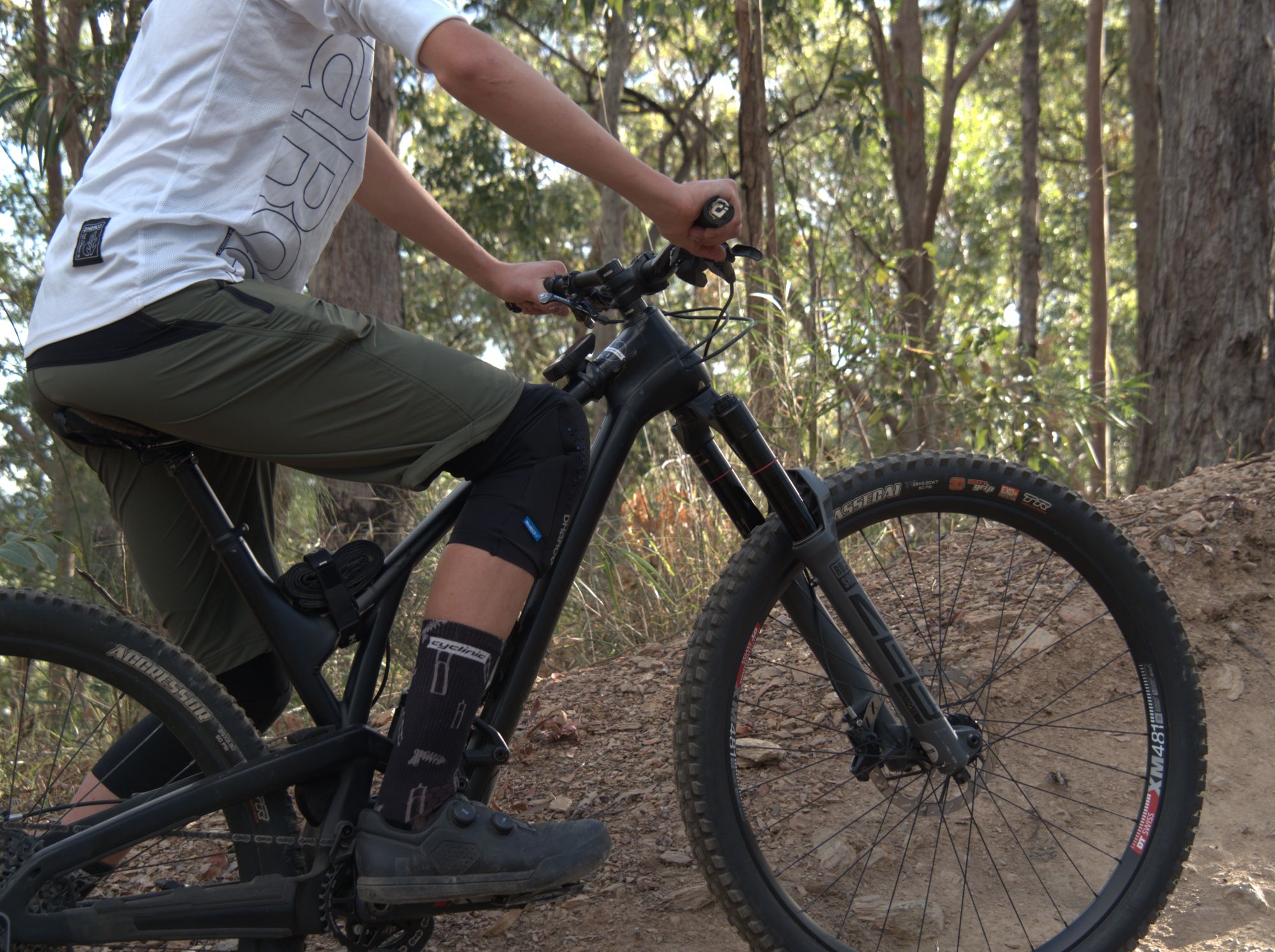
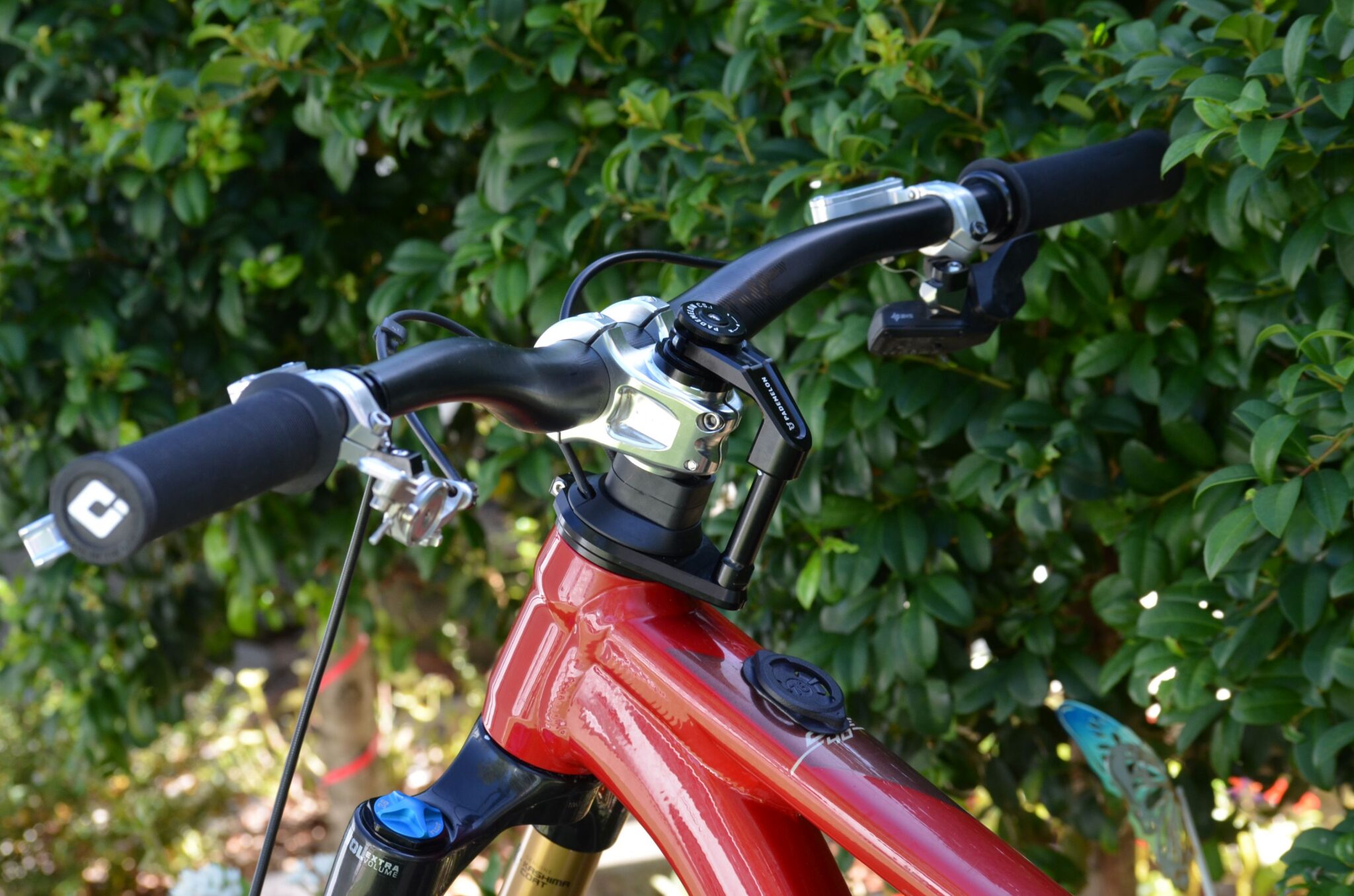
The AMB test team were lucky enough to hop aboard a Pademelon-equipped bike at Sea Otter Australia, and with a quick ride, were immediately impressed by the effectiveness of the steering damper. We wanted to fully put the Pademelon CS.1 through the wringer though, so who better to test the damper than crash Bam-dicoot himself?
If you’ve kept a finger on the pulse of what is happening in the Enduro World Series and Downhill World Cups, you might have noticed a few Pademelon dampers onboard some high-profile athletes’ bikes. When you’re against the clock, every avenue of performance gains must be examined and explored.
But do we, the common folk, need such performance-focused parts added to our trusty trail, enduro, or downhill bikes? That’s what we tried to find out in this review of the Pademelon.
I was completely unfamiliar with the history of steering dampers in mountain biking until I started seeing the Pademelon pop up across my socials and race coverage of the EDR – having someone like Richie Rude testing your product is certainly going to shine a spotlight on it. Not that Jeremiah Boobar, the man behind the Pademelon, is not used to the limelight – just look at his extensive CV of incredible achievements.
Someone who creates and develops the BlackBox program for SRAM is not going to stop innovating, even if that means doing it on his own. The most remarkable part about Jeremiah’s development and commercialisation of the CS.1? It all happens in the small, quiet town of Maydena, Tasmania.
Thus the name, that comes from the small marsupial that is ever-present in Tasmania (although I would argue that the Quoll damper would have had a nice ring to it too).
I have been familiar with the concept of steering dampers on motorcycles for many years; my race bike has one and I wouldn’t go without one. But in mountain biking? What an interesting concept!
To be clear, both work in completely different ways, which makes them behave in ways that are appropriate to specific cases – I won’t get too deep into the tech as there are better places to read about it, you just need a quick search and many hours to digest all the tech.
The first time I had the opportunity to have a play with the Pademelon was in Maydena in early 2025, as they have one on display at the bike park’s workshop (and due to my lack of self-preservation, I spent a fair bit of time there). At the time I thought, “Man, how good would it be to test one of these here!” But the question remained – do you actually need a steering damper?
Fast forward about a year, and a Pademelon CS.1 arrived at my doorstep in a small box, well packaged and with a personal note. I was finally going to be able to put the claims to the test.
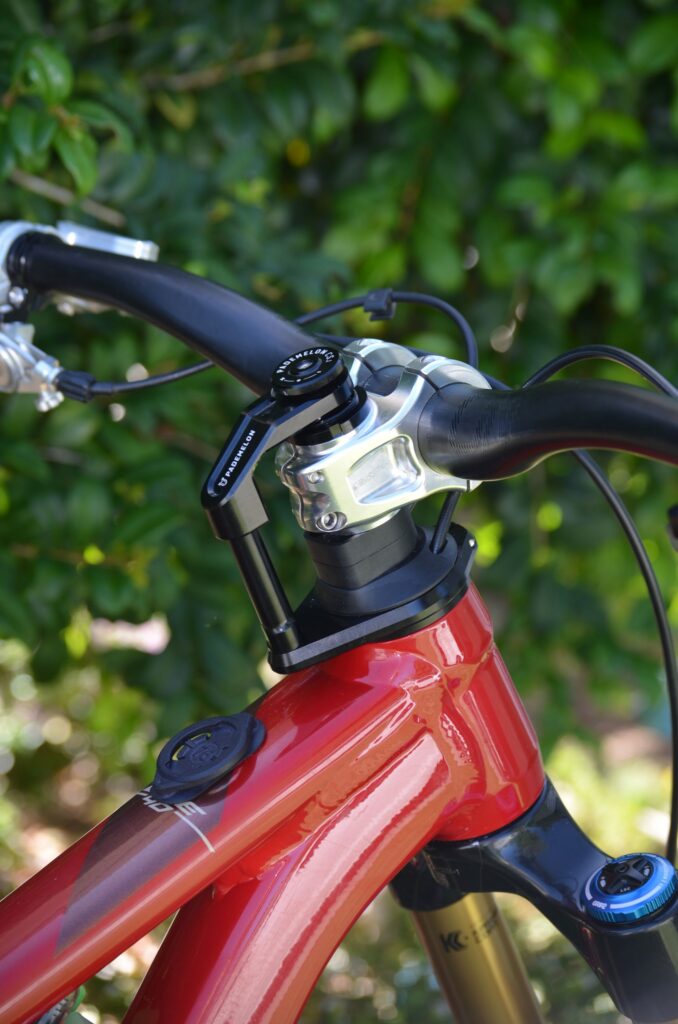
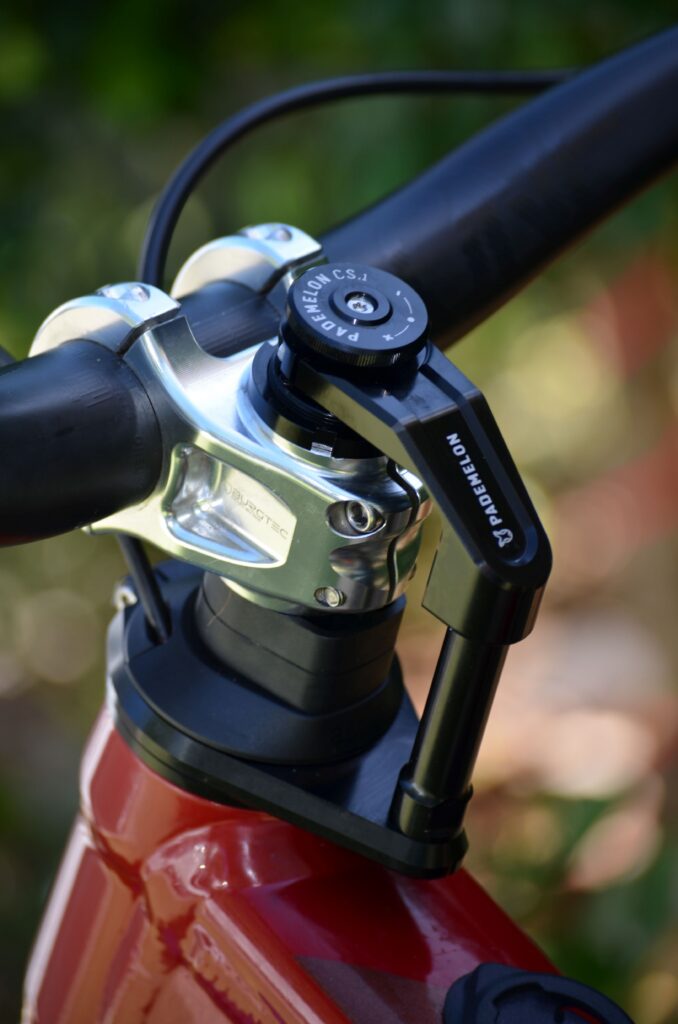
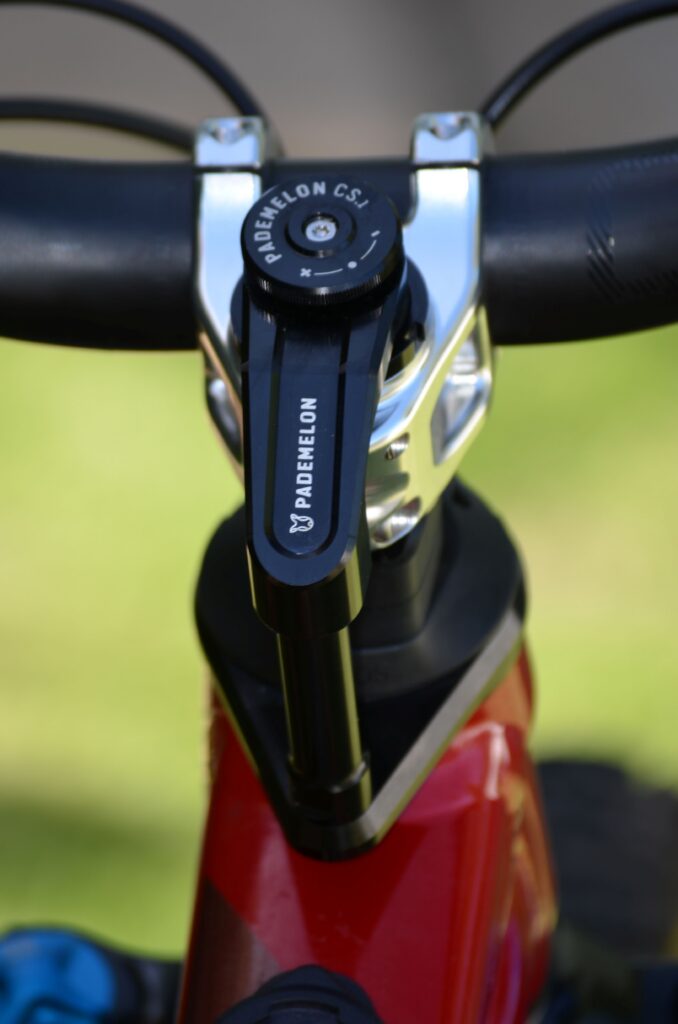
Included with the Pademelon is a few spacers, a preload tool, and a remover tool. You will need to make sure to also get the correct mount kit for your bike of choice. In my case, it was an IS mount compatible with the headset routing (which makes things even more interesting) on my Merida One-Sixty. With a total weight of just over 200g, it’s not noticeable once on the bike.
Installation was not what I would call straightforward and intuitive – but then again, I am not a mechanic by trade or by skill. I found the instructions that came in the box to be hard to read and easily dissect.
If you’re a visual learner like me, Pademelon has fantastic installation videos on their website, which were an absolute godsend in allowing me to have the installation done in my personal workshop. But as with most things that affect your safety, I always recommend the installation be done by a professional mechanic.
Side note – if, like me, you have headset cable routing, you will need to cut the brake line to install the IS adaptor cup onto your frame. Not a deal breaker, just headset-routing things.
The new cup will raise your stack height by a few millimetres (in my case, 10mm), so pay close attention to your fork steerer length and how much room you have to play with. You might need to make some changes to your cockpit to make it work.
Once installed, the Pademelon CS.1 is barely noticeable when set to no resistance – out of 3.5 max turns, it required a full turn before I felt any significant resistance. It’s definitely there and working subtly, but in a good way.
On my first ride, I was pretty astonished – surprised by how noticeable the Pademelon was on trails I have been riding for many years. Jeremiah did the right thing and based the Pademelon on a concept that had been proposed a couple of decades ago – he purchased the IP from the original creator to make it happen.
Throughout testing, it quickly became apparent that the Pademelon has a significant impact on your riding, particularly from 2.5 to 3.5 turns from fully open. Because it’s an infinite adjustment with no clicks or marks, you can truly set it exactly how you like it; however, because of this, finding the exact same sweet spot after adjusting it for a different trail can be tricky.
I really benefitted from the Pademelon. I’m not, and never have been, a rider with a lot of upper body strength, tending to steer with my hips and a lack of self-preservation. This deficit became particularly noticeable when I changed from a ‘conservative’ 450mm reach on my previous bike to the 480mm reach on my current medium-sized enduro bike. Having a longer reach and less-than-ideal upper body strength has always put me in situations I’d rather not find myself in, and I found that front wheel deflection was a common trait of my riding. I always look for a softer front suspension set-up, as well as pinch-flat-prone low pressures in my tyres, to try and increase traction as much as possible from the front of my bike.
The Pademelon transforms my enduro bike into a rocket on rails across anything that, in the past, might have made my shoulders and forearms call for help. This is particularly noticeable after a long day of riding, where the Pademelon will actively contribute to fewer mistakes due to fatigue.
I was able to stiffen up my fork just enough to give me more support at higher speed, which also made a significant difference when riding fast, janky trails. I have made no changes to my tyre pressure, though – some things might never change.
I found the sweet spot somewhere almost halfway between 2.5 and 3 turns – not very precise, I know, but that’s what the experience is like and, to be fair, it’s 100% spot on 85% of the time.
What I really enjoyed about it is that while making firm, deliberate turns, the damper releases and is no longer active, therefore allowing you to manoeuvre your bike easily around tight spots or tough technical climbs. It also returns to centre normally, with no resistance – meaning that it keeps the bike riding intuitive and natural, which I was sceptical of when I first installed it.
When descending, anywhere up to 2.5 turns will give you a natural feel on the trail, while keeping the front wheel tracking straight over roots and rocks that would usually be pulling you out of your favourite line – the damping almost feels like a small amount of auto-correct, in an intuitive way.
Using the damper closer to its upper limit has some obvious positives – an almost unbelievable level of correction and energy conservation. Those positives were mostly overshadowed by the negatives when using the Pademelon at its most extreme setting – the steering felt delayed and lethargic, with significant input needed to make up for the resistance. This is perhaps more obvious for those riding very loose-over-hard terrain on my local loops, where micro steering inputs are the difference between leaving a smooth-radius corner with a tonne of speed or having to pedal after grabbing a chunk of brake to avoid overshooting.
However, unless you’re entering every section of trail at Goldstone speed, or your trails truly are as rowdy as trails can be (looking at you, Maydena), the max adjustments will be overkill.
I personally would love for the damper to be easier to adjust on the fly while riding – having a lot of trails locally that are only steep in sections makes me wish I was in a different setting half of the time. Needed? Not at all. More of an idea of how the Pademelon could progress in the future.
I don’t think the Pademelon is a part that only suits enduro and long-travel bikes. I do wonder how good it would be to have a Pademelon installed on my trail-ready Norco Revolver to make it an even more versatile bike.
Would I buy a Pademelon for myself had I not been given a chance to test one?
Without testing it myself, I would be questioning the choices that led me to think a steering damper was a good investment – after all, it’s not an inexpensive upgrade.
Having tested it now, I regret not considering it an integral part of my arsenal of ‘talent boosters’ sooner. I most certainly wish I had one at Maydena, the birthplace of this incredible piece of engineering and ingenuity – maybe I wouldn’t have spent as much time at the workshop getting parts fixed.
RRP From $799
More info at pademelon.cc