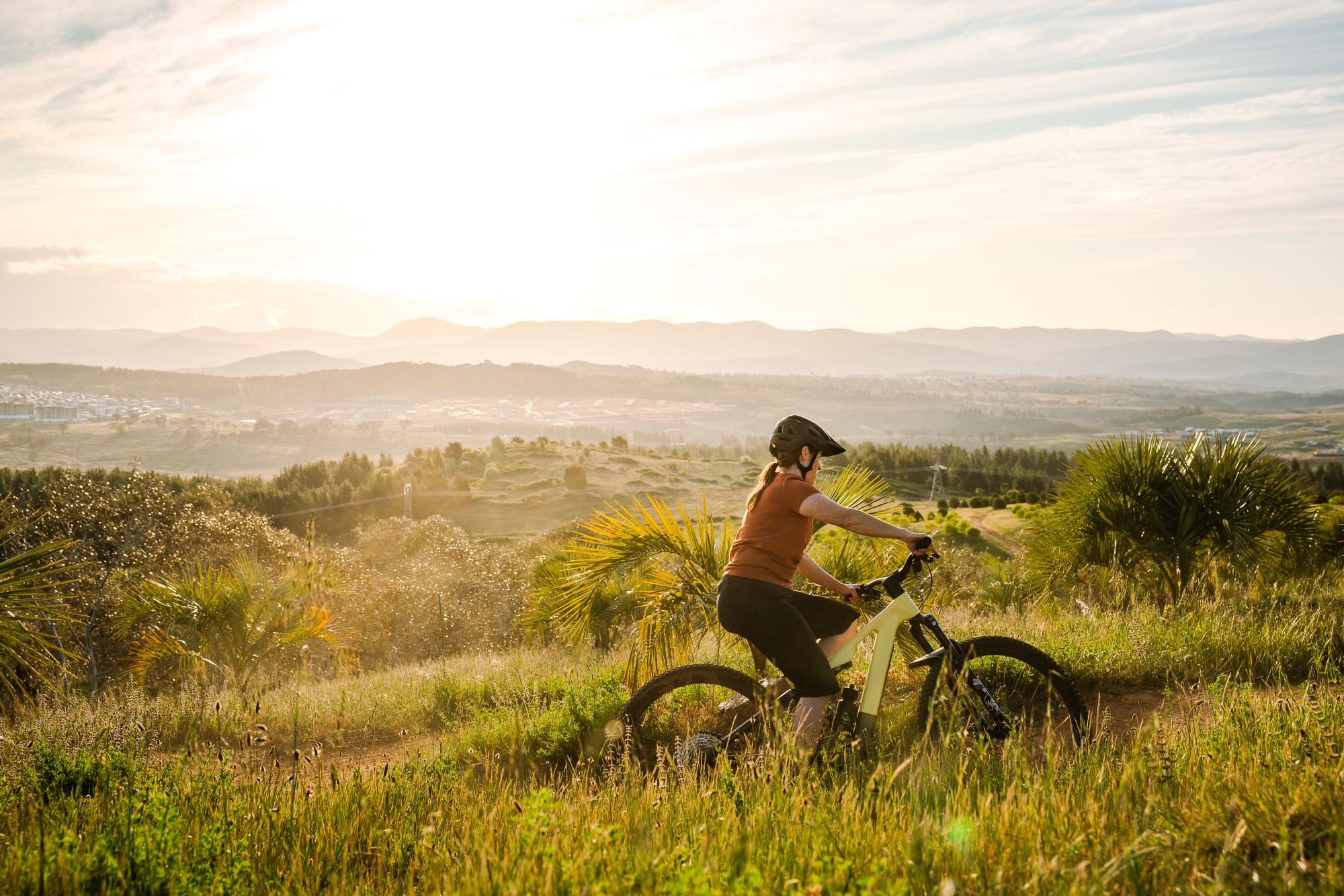
We’ve all experienced it: that eagerly anticipated ride where your body doesn’t come to the party. Pedalling feels effortful, bike handling feels sludgy, heart rate and breathing feel off, flow is nowhere to be seen. It’s so frustrating that all you can think about is how to turn this tired, struggling body feeling around.
The flipside of these rubbish feeling rides is that sometimes they’re the kick we need to get our health and daily habits back on track. A kick our brains can’t ignore, because if we do, those good ride feelings are going to take a lot longer to return.
I normally use this column to write about the ways our mental skills help to extend our physical skills on the trails. This issue I want to write about the opposite: how valuable the body awareness we develop through riding is when it comes to making better decisions off the bike. It can be the prompt we won’t ignore when it comes to getting to bed earlier, eating more vegetables, drinking more water, checking in on how other health issues are tracking, reducing our stress levels, or troubleshooting whatever it is that we’re doing off the bike that’s making us feel sub-optimal when we’re on it.

If you’re someone who rides regularly, time on the bike provides a valuable benchmark. We know in and through our bodies what a good day feels like – a particular feeling when pedalling, reliable bike-handling, energy levels that match your expectations, sometimes exceeding them. When that baseline shifts dramatically, it’s a big red flag that’s hard to ignore.
I had one of these red flag rides recently. After a couple of rainy months trailing some new medications to support my immune system, I thought I was feeling pretty good. As soon as the trails dried out, I rode my favourite mountain biking loop.
A short amount of pedalling was enough to know that I wasn’t feeling good at all. My muscles felt like I’d ridden a marathon the day before. My breathing was raspy. I needed to rest in places where I would normally feel energised.
That ‘rubbish’ ride was the motivation I needed to think wider, dig deeper, adjust some daily habits, keep chatting with a doctor, and get myself back on track. As someone living with lifelong chronic health conditions, I’ve lost count of the number of times riding has provided feedback on how my body is doing in a way that going for a walk or sitting in a desk chair cannot.
At the high-performance end of the sport, four-time Australian cross-country Olympian Rebecca Henderson recently took an unplanned break from the World Cup season to rest and reset. Feeling ‘off’ on the bike, and knowing how she should feel, meant she learned about a parasite that wasn’t going to do her any favours if she kept on pushing through or left a bad-feeling situation ignored.
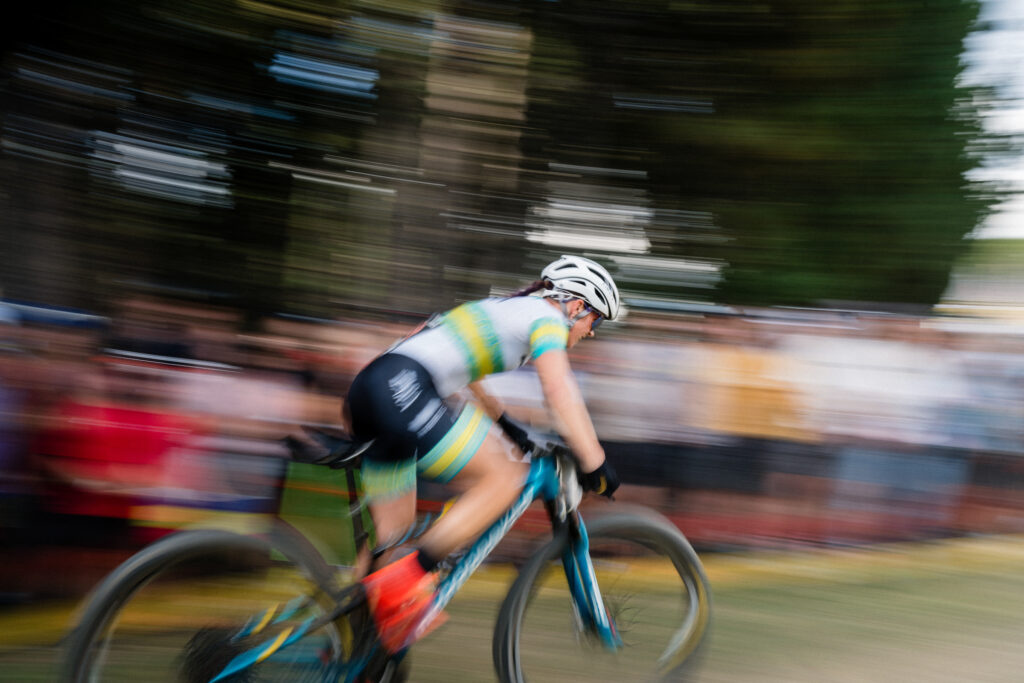
Current Olympic and World Road Cycling Time Trial Champion Remco Evenepoel pulled out of the Tour de France early after performing below his expectations and feeling off. He didn’t know the reason for this at the time, but knew it was important to abandon the race rather than keep on pushing through.
Both riders had the support of their teams to put their health first but felt the need to defend their decisions to the adoring public – a public that cheers people on when they push through at all costs, yet demands answers when that same rider decides to put something else first.
Personally, I’m glad to see riders at the pinnacle of our sport normalising this vital message (even if those same riders have done their fair share of pushing through at other times). In a world where burnout and health challenges are more common than we’d like to admit, having role models whose actions and decisions remind us to listen to our own bodies is such an important antidote to the ‘suffer-at-all-costs’ mentality. It encourages us to step back when we need to, invest in recovery, and enjoy more consistent – and healthy – performance in the long term.
Next time you feel like rubbish on the bike, instead of complaining about it, learn from it. Even though you don’t feel how you want to then and there, be glad for the role that riding plays in the bigger picture of your life – how that body awareness you develop on the trails prompts you to keep looking after yourself away from the trails, and how that pays forward into so many other parts of your life as well. If you’re experiencing a more challenging health situation, keep exploring what the role of cycling or gentle movement brings to your coping skills as you navigate this situation too.
If there’s no obvious reason for feeling sub-par, keep checking in with the self-care basics, and seek specialist help if you need it. I guarantee you that any effort you put into feeling better on the bike will add to your experiences, knowledge and strategies you call on off the bike as well.
Learn more about using your mind to get more out of your time on the bike from Kath Bicknell at:
Web: intelligentaction.cc
Insta: @Intelligent_Action
Facebook: Intelligent Action