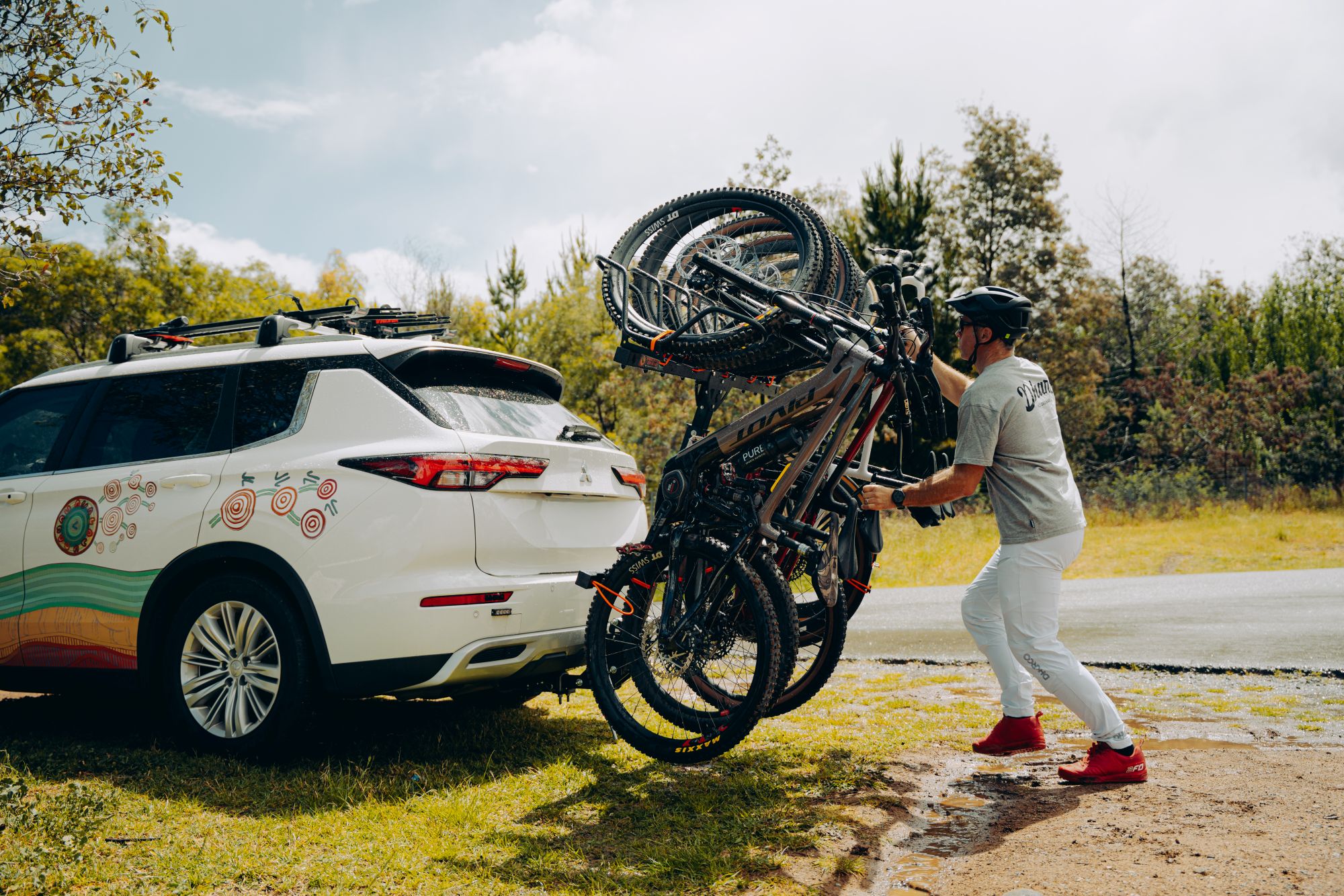
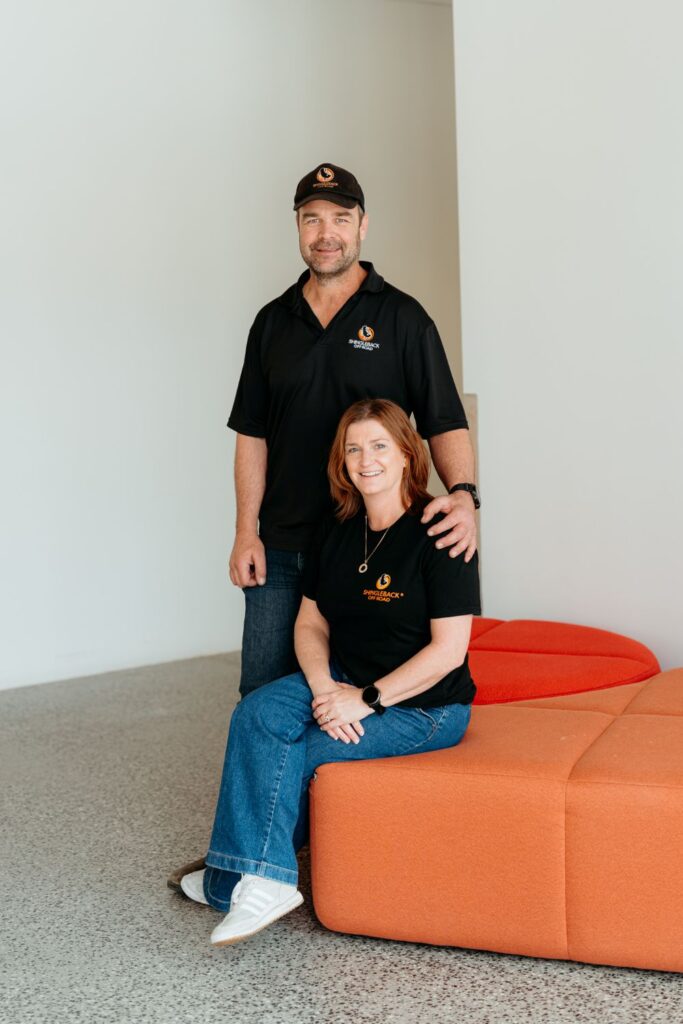
In the quiet corner of Beechworth, Northeast Victoria, a small shed hummed with the kind of creativity that reimagines how Australians get outside. That’s where Andrew and Kimberley Taylor began Shingleback, a brand that would become synonymous with rugged, solution-focused bike racks designed, as Andrew puts it, to just “get you out there.”
Instantly likeable, down-to-earth and authentic, Andrew and Kimberley’s attempt to find a way to work from home and solve a bike transport problem soon blossomed into one of the highest regarded bike-carrier companies in the country.
It started – like many big ideas do – with a problem: Andrew’s friend was struggling to shuttle four bikes at once and the racks on the market were clunky, slow to load, and prone to damaging bikes.
A boilermaker, welder, and lifelong rider, Andrew saw the challenge and opportunity to create something new. Instead of driving an hour into the nearest regional centre for work, he stayed home and built something better – first in the shed, then in collaboration with local engineers, and eventually upscaling production across Victoria.
Their first racks were simple and built to last – a new way of looking at transporting bikes. From the get-go, their focus was on protecting bikes, loading fast and surviving the ravages of a big day shuttling.
Andrew takes a tactile, hands-on approach as well: early prototypes were sketched on cardboard and even cornflakes boxes before being translated into CAD for production.
Kimberley recalls using the families savings on steel and materials to make that first ten racks, then selling nine through word of mouth before any advertising, and using the proceeds to fund the next batch. That word-of-mouth trust became Shingleback’s foundation, and demand quickly outgrew every workspace – Shingleback soon expanding from at-home production to a local engineering subcontractor, then to a bigger manufacturer in Albury-Wodonga and Wangaratta in order to meet the rapidly increasing demand.
From that initial launch of the Shingleback Classic in 2017, the brand has grown to 24 separate innovations, each refining the original idea. Designs are practical, market-forward and thoroughly tested – patented wheel cradles that load five bikes in a minute, aluminium bottom bars that double as shear pins to protect the bike, and materials chosen to withstand real-life adventure.
The range of riders the brand caters for has also expanded, with new gravel and road wheel inserts, BMX-friendly adaptors and even a recent moto and bike compatible rack setup.
But despite being product first, Kimberley states the brand isn’t just around to make a quick buck. “Andrew’s design is about good products, good functionality, longevity, and achieving the activities you set out to do.”
Parents of teenagers, Andrew and Kimberley state that their own children getting on the road and driving reinforces their commitment to safety in their design, “It makes you think about it more,” Kimberley says.
“You don’t want them driving down the road, following one of these cheap imported racks that could potentially fail – and it’s been happening. We’re getting contacted by people who have had rack failures before. The saying is true – the poor man pays twice.”
“We wanted to make a living. We wanted to stay in the high country. And we needed to eat and to raise three children. You need to make a profit, and if you don’t make a profit, then you can’t help. So that whole circular economy is here as well. But I think it just comes back to the driving force of why you’re going into business. Some go into business for their passions and some go in for the wrong reasons.”
Kimberley demonstrates that Shingleback are in it for all the right reasons, building a community they call the “orange-bungy army,” showing up to events with their Shingleback racks in tow.
The brand has won recognition, including a Good Design Award for the Shingleback Pro, and gives back to the community through programs like Granite Girls in Beechworth and sponsorships for development squads and charity events.
For Kimberley and Andrew, Shingleback is a blend of lifestyle, purpose, and pride. “I can’t stop thinking of the next project,” Andrew says. His relentless drive to create is apparent: from racks that fit multiple bikes to moto racks with minimal overhang, every design is about solving real problems for real riders.
Ben tested three of Shingleback’s racks, the Shingleback, Shingleback Classic and Shingleback Pro – taking bikes on endless shuttles and highway road trips so you don’t have to.
Shingleback Off Road Classic Vertical Bike Rack
Tester: Ben Morrison
When it comes to hauling bikes, I’ve always believed a good rack should disappear into the background – quietly doing its job so you can focus on the ride ahead. Over the past few months I’ve been testing the Shingleback Classic Vertical Bike Rack, the most affordable model in Shingleback’s line-up, to see how it stacks up in the real world.
I’ll admit, when I first opened the box and saw the spread of parts, it was a little intimidating. There’s a fair bit of steel and hardware laid out in front of you, and it’s not immediately obvious how it all fits together. But once you get into it, the design starts to make sense – it’s solid, well built, and clearly engineered to last.
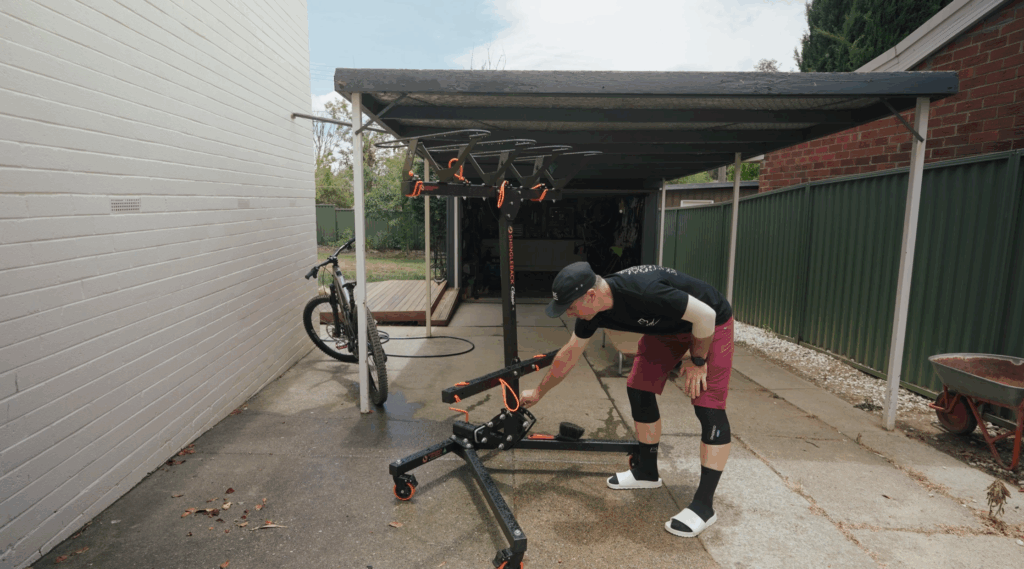
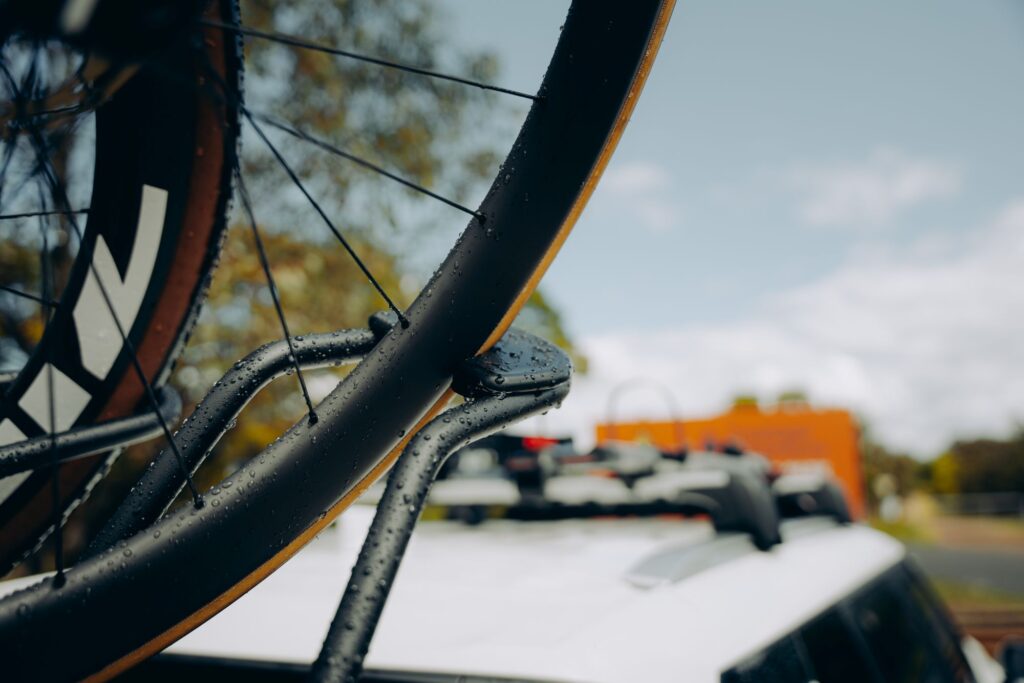
The rack fits a 50mm square hitch, and I installed it on my smaller SUV with no dramas. Everything slotted together tight, and the finish quality was excellent. The Classic’s hoop-style cradles are a proven Shingleback design, holding each bike securely by the tyres only, with no frame contact – perfect for carbon or alloy bikes.
I put this rack through some long hauls, including a 9-hour highway drive loaded with a mix of mountain bikes and lightweight e-bikes, and it didn’t miss a beat. Bikes stayed stable, and there was no movement or sway even at higher speeds. The 23kg per cradle/100kg total rating gives plenty of confidence, but may be a limiter if carrying multiple heavier e-bikes.
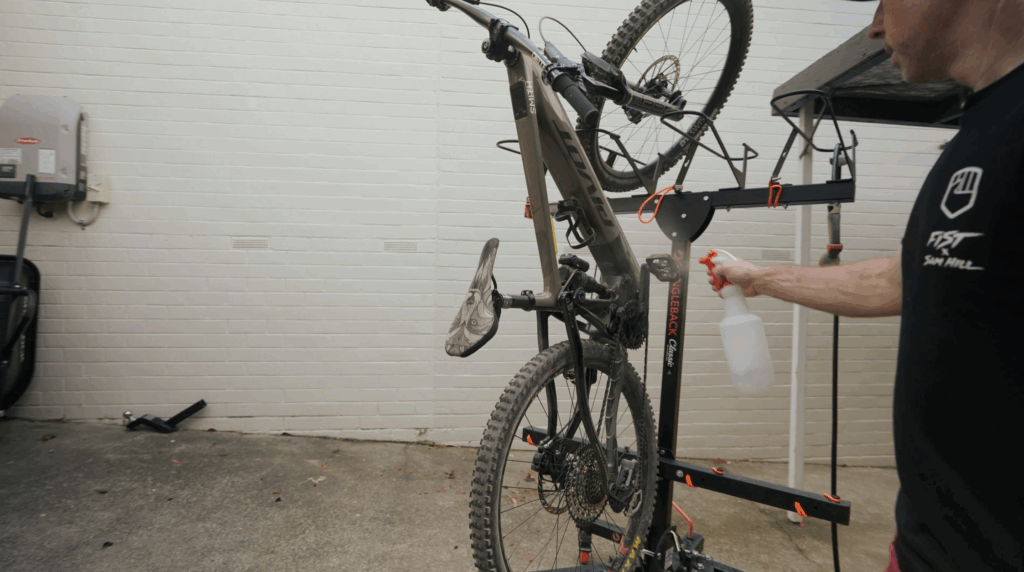
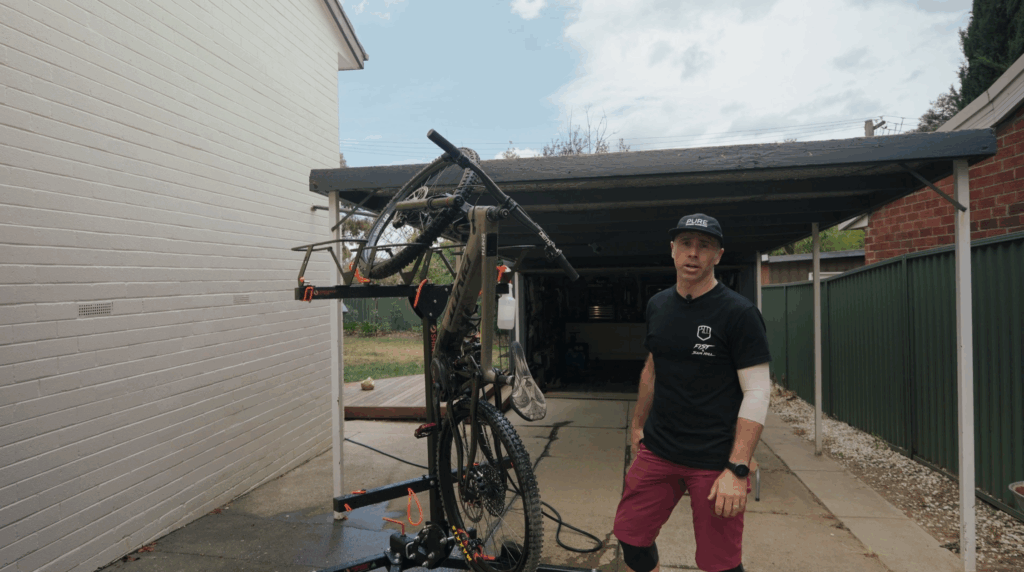
Loading is simple – you just roll the front wheel in and lift the rear slightly to slot it into place. No need to lift bikes overhead, which makes it kid-friendly and easy for one person to manage. The tilt mechanism, with its pin system and adjustable back stop, lets you access the rear of your vehicle without unloading, although it’s easier with two people if the rack’s fully loaded.
As much as I rate its build quality and reliability, the Classic isn’t without limitations. The wheel mounts are more basic in construction than Shingleback’s higher-end offerings. You can still fit 20” kids’ bikes with a bit of extra padding, but it’s clearly a rack designed first and foremost for mountain bikes.
Verdict
After a few months of use, I’ve come to appreciate the Classic for what it is – a tough, well-built, no-nonsense rack built to haul mountain bikes safely and securely. It’s not flashy, but it’s engineered to handle real-world abuse and long road trips without complaint.
If you want something that just works and you’re mainly carrying mountain bikes, the Classic is a smart buy, especially when you consider it’s backed by Shingleback’s 10-year warranty and local Aussie engineering.
If, however, you’ve got a mixed quiver of road, gravel, and mountain bikes, or need to carry a bike over 23kg, you might want to look toward one of Shingleback’s higher-end models with broader compatibility and a few extra creature comforts.
RRP from $1249
Shingleback Off Road Vertical Bike Rack
With my usual mix of bikes taken away when traveling with my wife, the convenience of being able to put a gravel bike on the back of the car and not the roof was welcomed with open arms. The Shingleback (sans Classic or Pro – for the article we will refer to it as the Shingleback) rack’s performance was faultless – minimal movement and reassuring stiffness with options to carry from 3–6 bikes.
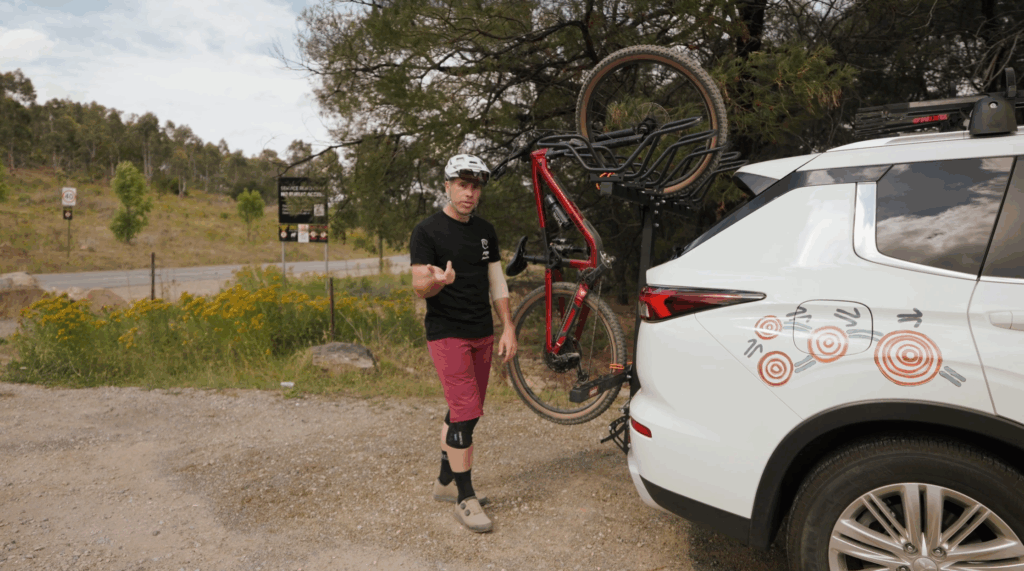
What stands out though is the flexibility and compatibility: this rack accommodates mountain bikes, e-bikes, road bikes and gravel bikes even BMX’s (with the roadie or BMX insert set, both RRP $150) far better than the Classic could, and with a 35kg limit per wheel cradle and a 105kg capacity for the rack – this is a great option if you’re likely to be carrying a range of analogue and full-powered e-bikes.
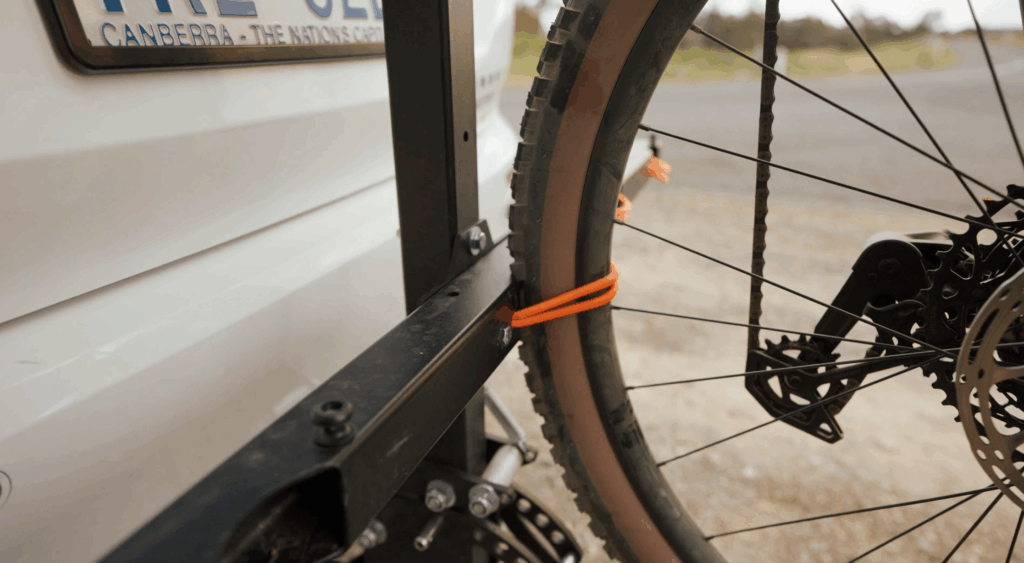

The foot-latch tilt mechanism is now there and works gloriously – tilting even when the rack is loaded gives access to the boot without unloading bikes and allows you to lower it with ease by standing in front of the rack and remaining in control. That alone makes it worth the upgrade in my book. Being able to carry road or gravel bikes properly (not just MTBs) is also a big tick for us and means this rack is a true “one-rack-for-everything” solution.
Because I’m using a mix of bikes and doing race weekends and long drives, the premium rack shines when you consider versatility and convenience, especially when you have a family with a variety of cycling passions.
Compared to the Classic this does feel like a premium model and yes, it does come at a higher price. If you’re only carrying e-bikes and mountain bikes, you might find the Classic or Pro gives you 90% of what you need for less.
Installation is still a bit of a project (unpacking, assembly, tuning fit to vehicle), so make sure you allocate the time and have the tools handy. Especially with heavier racks, mounting and vehicle clearance issues (tow-bar/hitch etc) still matter and you may need to change things if using different cars.
Verdict
If you’re serious about your bike’s transport (and require up to 6 bikes as an option), carry a varied bike collection and you value quick access, premium build and long-term durability, then the Shingleback Vertical rack is a smart investment.
RRP from $1655
Shingleback Off Road Pro Vertical Bike Rack
When I finally got around to trying the Pro model from Shingleback and fitted it to my SUV, I really wanted to put it through its paces to see if it was worth the pricetag – especially when compared with the Classic and Shingleback racks. My use of the Shingleback Pro included highway drives using a mix of mountain bikes and e-bikes. I also needed to access the boot easily – meaning this rack had to deliver in a few key areas.
Right out of the box it feels markedly more premium than the Classic. There’s the familiar heavy steel and chunky hardware, but the components are refined. One of the first features to stand out is the height-adjustment mechanism: the post from the tow-bar up to the top of the rack can be adjusted to suit different vehicle clearance or bike height (the Classic rack is a very tight fit on my SUV). That flexibility alone makes the Pro a winner for those with different bikes or mixed vehicle types.

Installation on my smaller-SUV tow hitch was straightforward; the reinforced tow-bar tube design gives confidence the load won’t flex or wiggle when offroad or shuttling.
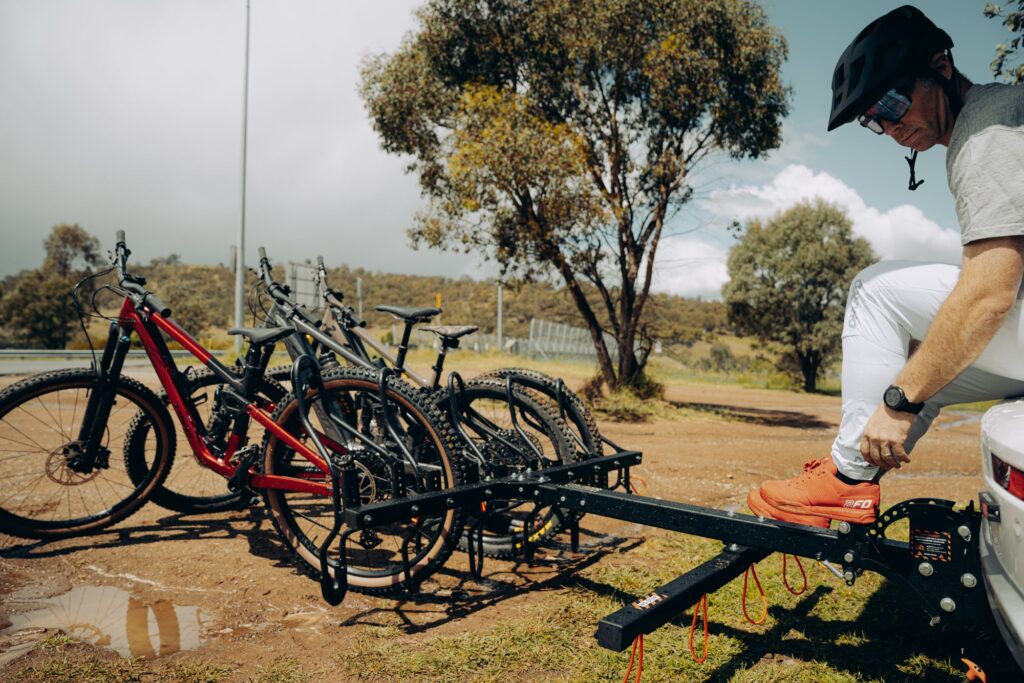
Once again I loaded the Pro up with a mix of bikes – mountain bikes, e-bikes, and once again adding road/gravel bikes into the mix – and I took the rig for a long haul. The Pro is available in 4–6 bike models and is rated up to 140kg with a 35kg limit per cradle, which gives it the highest weight capacity of the three on test.
The height adjustability of the Pro means clearance issues (driveways, steep ramps) are far less of a worry. And the roll-in loading (tyre only contact) remains excellent – no frame contact, which is important with carbon bikes.
The foot-latch tilt system again showed its value: with all bikes loaded I could tilt the rack to access the boot of the car without unloading.
What really sells the Pro is the versatility. Because of the height and load capability, this rack doesn’t limit you to just mountain bikes or e-bikes – you can carry road bikes or gravel bikes too (with the right accessories) and mix wheel sizes from 20″ up to 29″ and up to 4″ tyres.
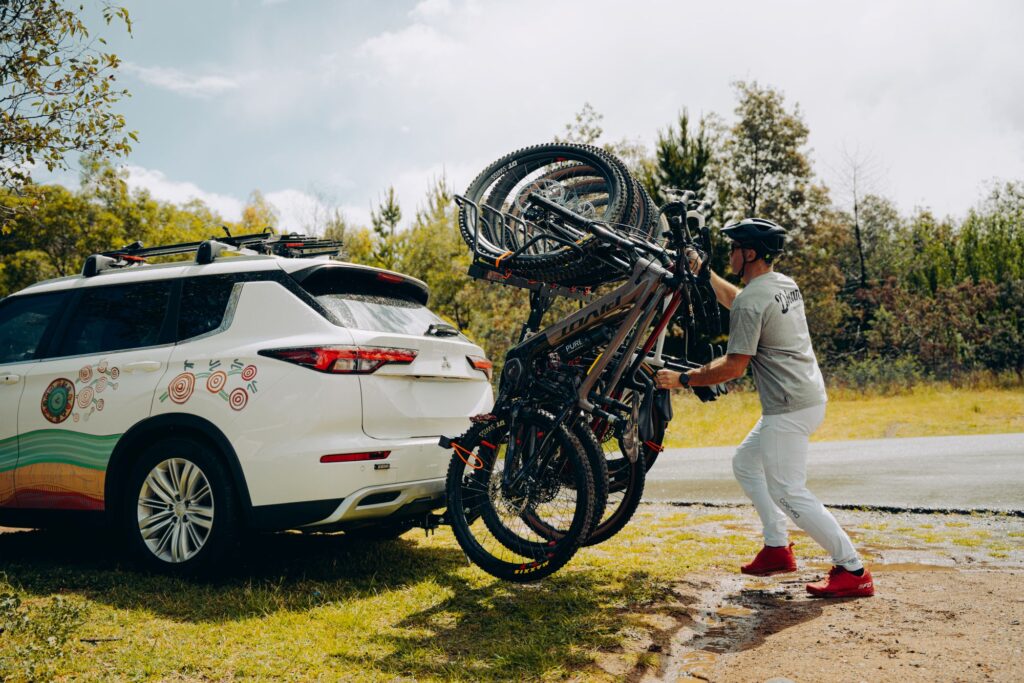
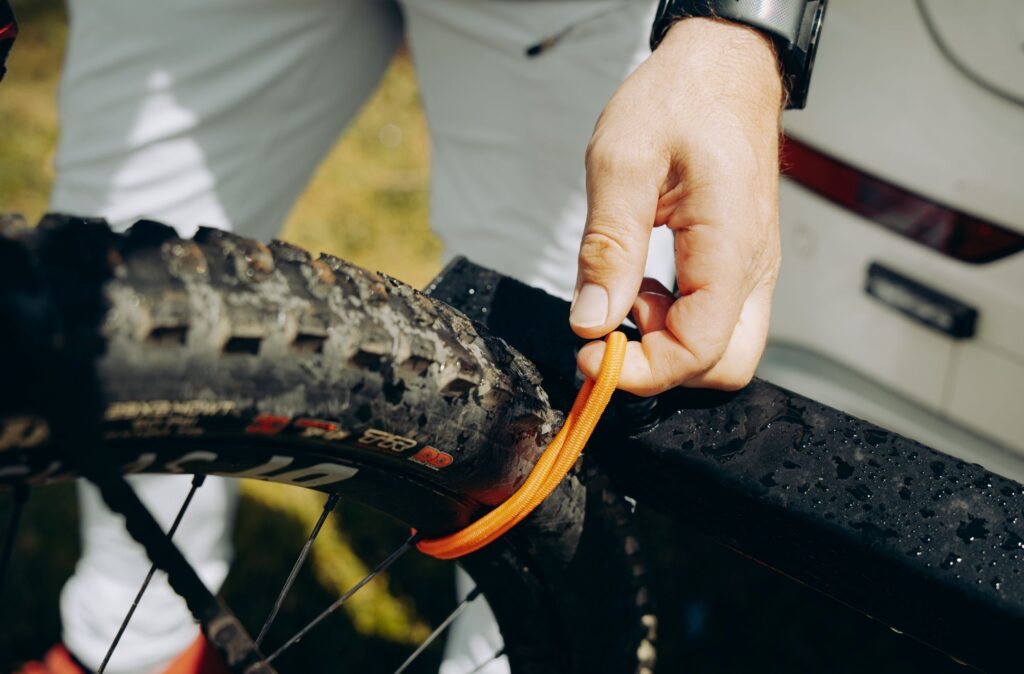
In my situation the Pro feels like a one-rack-for-everything solution for serious mountain biking families or dedicated shuttlers. The build quality, the reinforced hitch tube, and the real load capacity give confidence for long drives and heavy off-road and shuttle use. It also means I know it will fit on my next car (whatever that may be).
No product is perfect, and the Pro does carry a much higher price tag than the Classic and Shingleback. If you’re only carrying a couple of mountain bikes occasionally, the added cost may not deliver a proportionate cost benefit.
Also, the height-adjust and heavy-duty features mean a bit more weight/complexity in the rack, which for smaller vehicles or lighter usage you might not notice or need, especially if you are taking it on and off a bit.
Finally, assembly and fine-tuning (tow-bar tube fit, height adjustment, tilting mechanism) still require time and care. It’s not purely set and forget – plan for that before you need to use it for the first time.
Verdict
For my purposes – long highway drives, a mix of heavy bikes, the need for boot access, shuttling and variable vehicle/bike combinations – the Pro is absolutely justified. The height adjustment, 140kg capacity, tilting foot-latch, and full bike compatibility give it strong advantages over the Classic and Shingleback models.
If you’re carrying multiple full-powered e-bikes, a mixture of road or gravel bikes with mountain bikes, or you travel frequently, the Pro is the smart choice. It goes beyond being simply sturdy – the design is genuinely considered, refined, and built to outlast years of hard use, making it a rack you’re unlikely to ever need to replace.
RRP from $2,265.00
Why consider the Standard or Pro over the Classic?
After using all three racks back-to-back, the decision hinges on what you ride, who will be using the rack, and how often it will be fully loaded. The Standard and Pro both feature an upgraded tilt mechanism that significantly improves access to the rear of your vehicle, which is essential if boot access is part of your routine. They also accommodate heavier loads and a broader range of bike types, from the largest e-bikes to future additions like gravel or road bikes, giving you far more flexibility as your riding mix evolves. While all models are solidly built, the additional strength and refinement in the Standard and Pro deliver better durability on long drives, rough roads, and high-use scenarios, making them the more capable choices where versatility and longevity matter.
My verdict is simple: match the rack to the reality of your riding. The Classic suits riders who mainly stick to mountain bikes, run lighter setups and shorter trips, and have a vehicle that doesn’t demand complicated fitment. The Shingleback offers broader range and practicality, covering mixed bike types and moderate loading without over-investing – it’s the balanced option, and the one I’d choose for most riders. The Pro is built for those who consistently haul heavier bikes, mix disciplines, travel far and often, and want a rack engineered for long-term durability. If you value that extra capability and are comfortable with the higher price, it’s the clear top-tier choice.
Learn more on Shingleback’s website.