Why 2026 Is the Year to Finally Ride Whistler
The Village Where Mountain Biking Grew Up
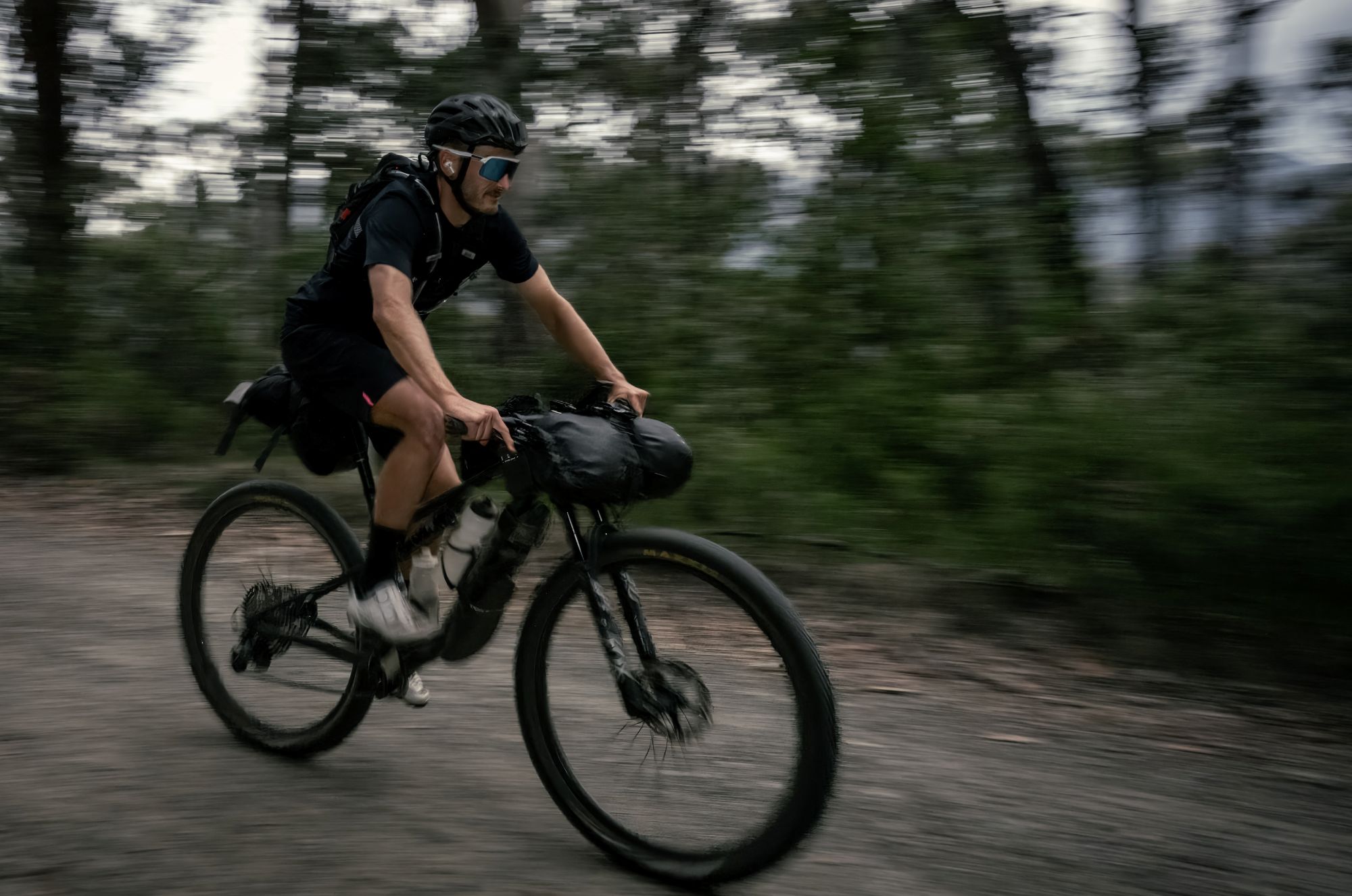
Mountain biking has plenty of destinations. Within Australia, the rise of mountain biking tourism is really taking off and starting to spread its wings. There are now plenty of spots with awesome trails, shuttle options and good vibes. But only a handful of locations can credibly claim they helped shape the sport itself, while continuing to be a bucket-list destination in 2026. In a way, we have to look all the way back to the beginning of the sport in Whistler, Canada, to see how mountain bike tourism has developed across the world.
For riders who grew up watching grainy VHS freeride edits, devouring magazine spreads of impossibly steep slabs, or scouring mountain bike forums (remember those?) during Crankworx week, Whistler has always existed somewhere in the future tense for Australians; a one day destination or a bucket list trip for a milestone birthday.
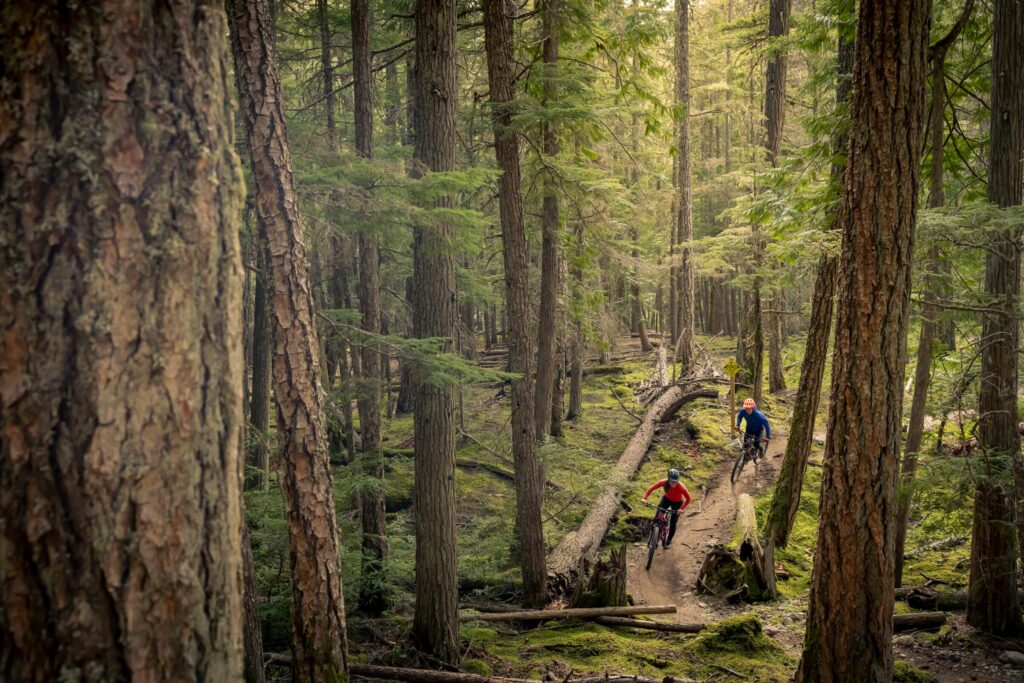
But Whistler isn’t just a museum of mountain biking’s past, it’s an active, evolving hub that in 2026 is more exciting than ever. Whistler now sports 120 trails with over 80km of singletrack and 1500 vertical metres of sweet descending. It’s bigger than anything we could imagine building here in Australia.
Whistler and Mountain Biking – An iconic duo like Vegemite and toast
Whistler’s relationship with mountain biking wasn’t accidental. When many alpine resorts were still treating bikes as a shoulder-season experiment, Whistler went all in and committed to becoming a mountain bike destination way back in 1999.
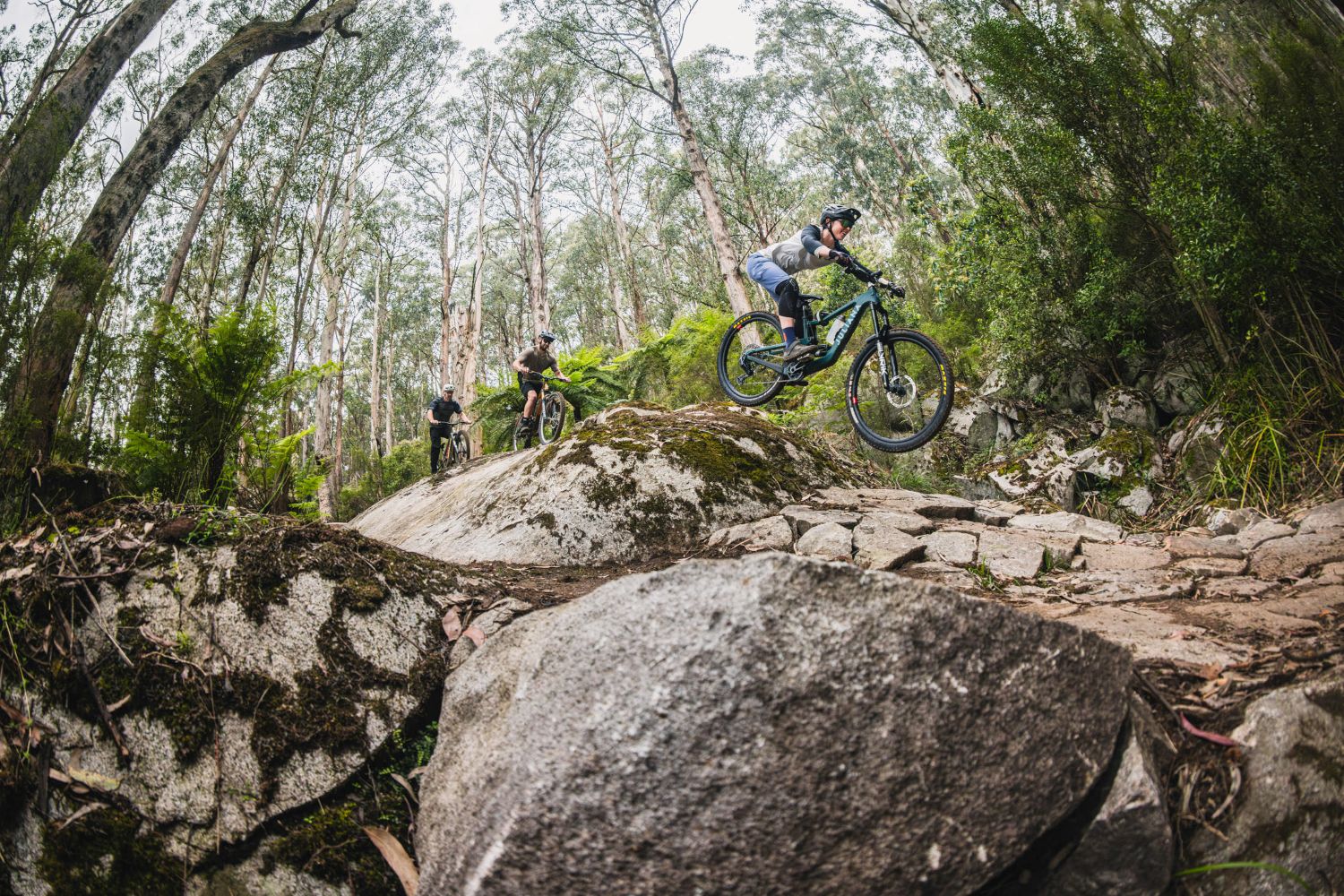
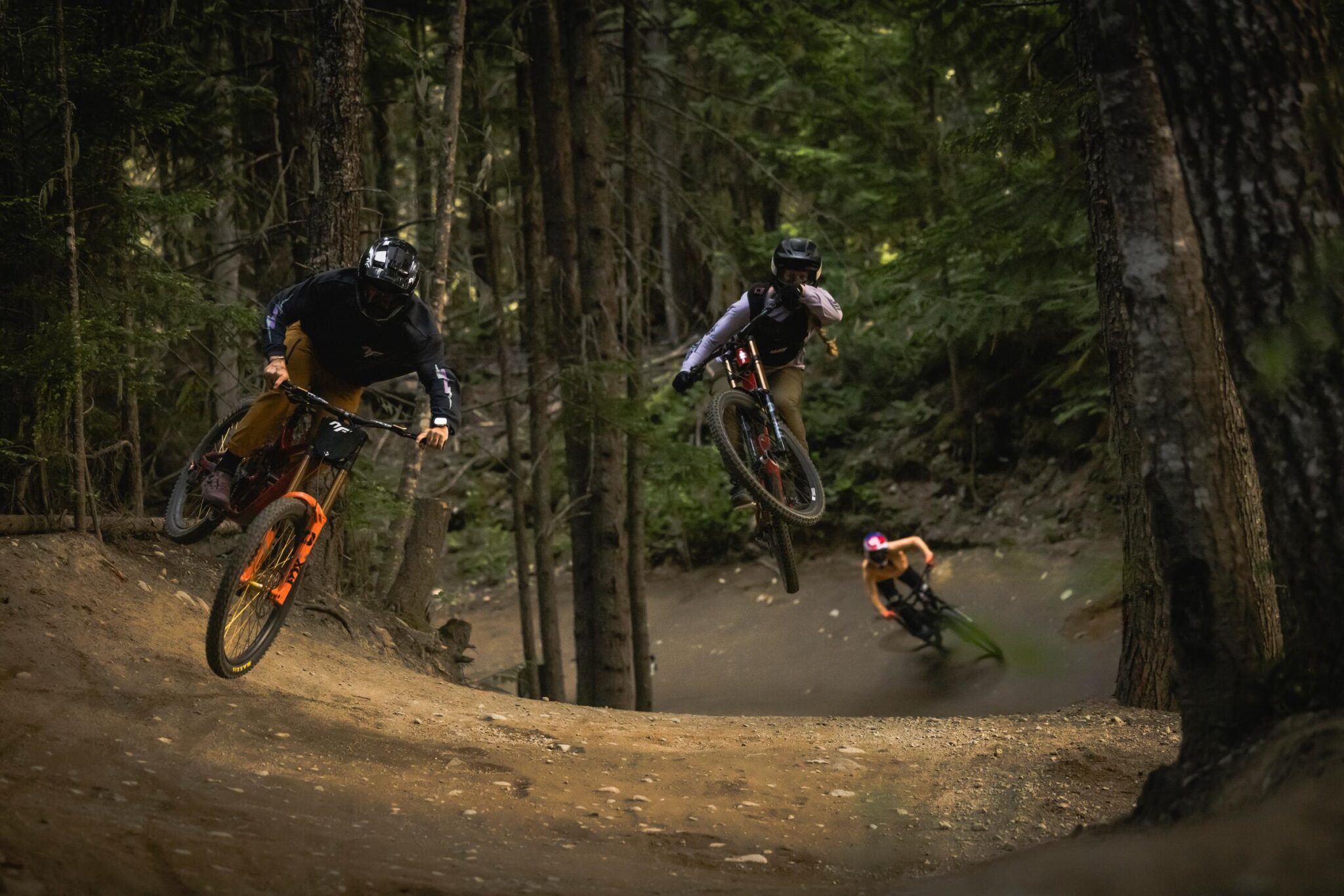
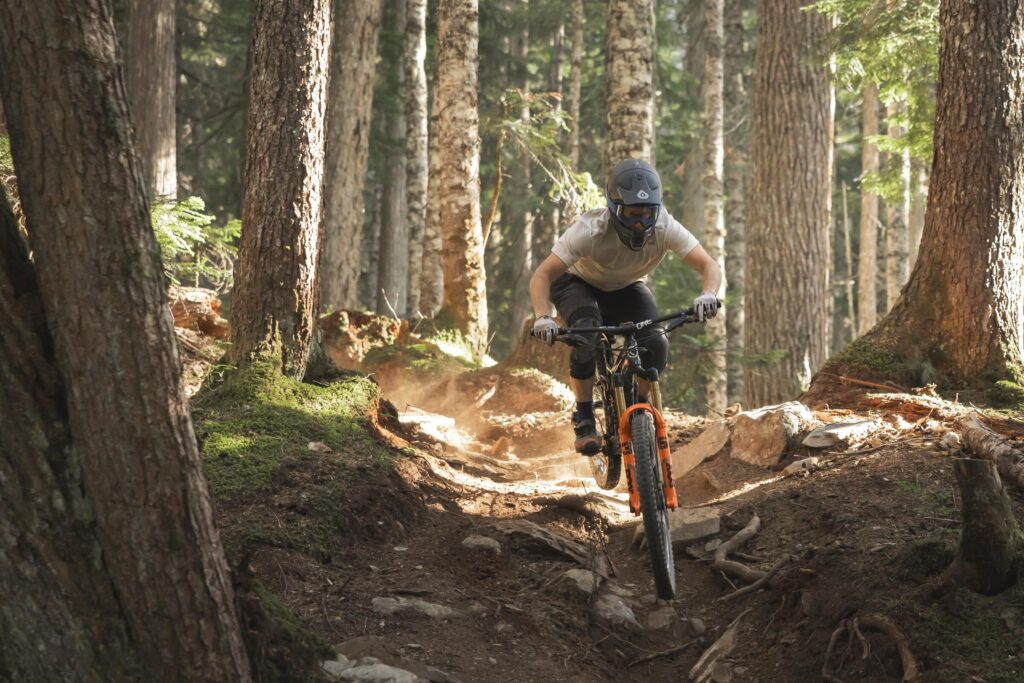
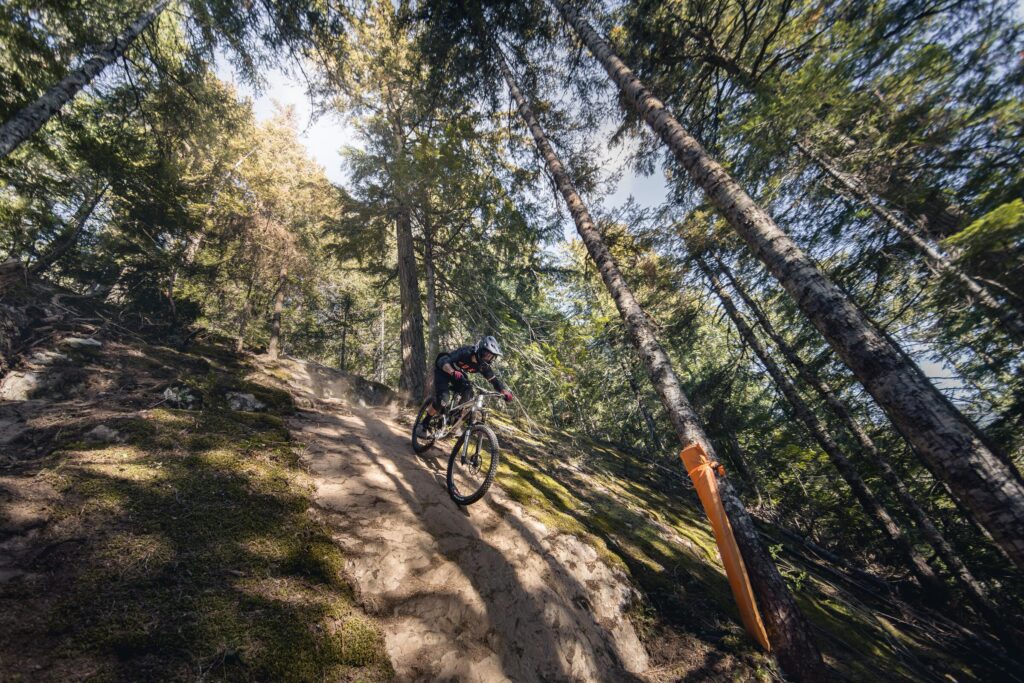
What followed became the blueprint for bike parks worldwide: purpose-built downhill trails, clear grading systems for all riders, ongoing maintenance, multiple chairlifts, and a focus on progression. Flow trails, rock slabs, tech chunder and gnar – it’s all available. But importantly, Whistler was developed with the ethos that all riders of different abilities could share the same mountain – and keep improving and levelling up their riding on the mountain. Likewise, the mountain continues to evolve and adapt as mountain biking matures as a sport, with several different zones for riders to explore.
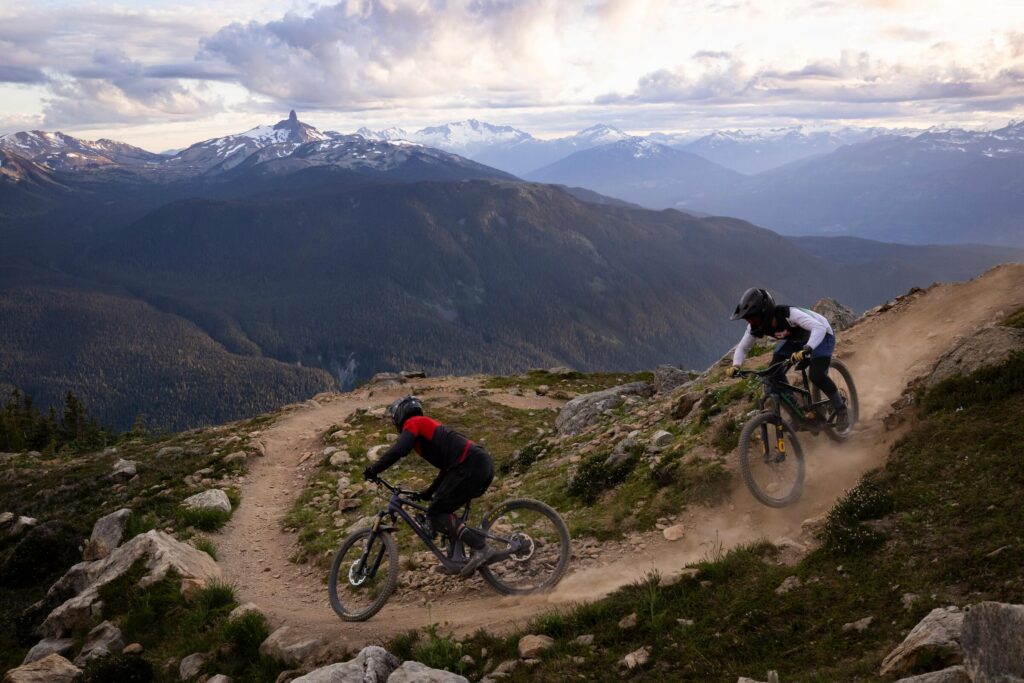
Proof of this is the recently expanded Creek Zone, opened in 2023, which expands ride options for intermediate and advanced riders, accessible by the Creekside Gondola. This adds a new area to explore, in addition to the gnarly Garbanzo Area and the varied and beginner-friendly Fitzsimmons Area. Of course, there’s also the iconic Top of the World trail – the 6km all-mountain/downhill trail that traverses entire ecosystems on the mountain – from jagged and rocky outcrops to steep and deep forest loam, it’s a must-do on every mountain biker’s bucket list.
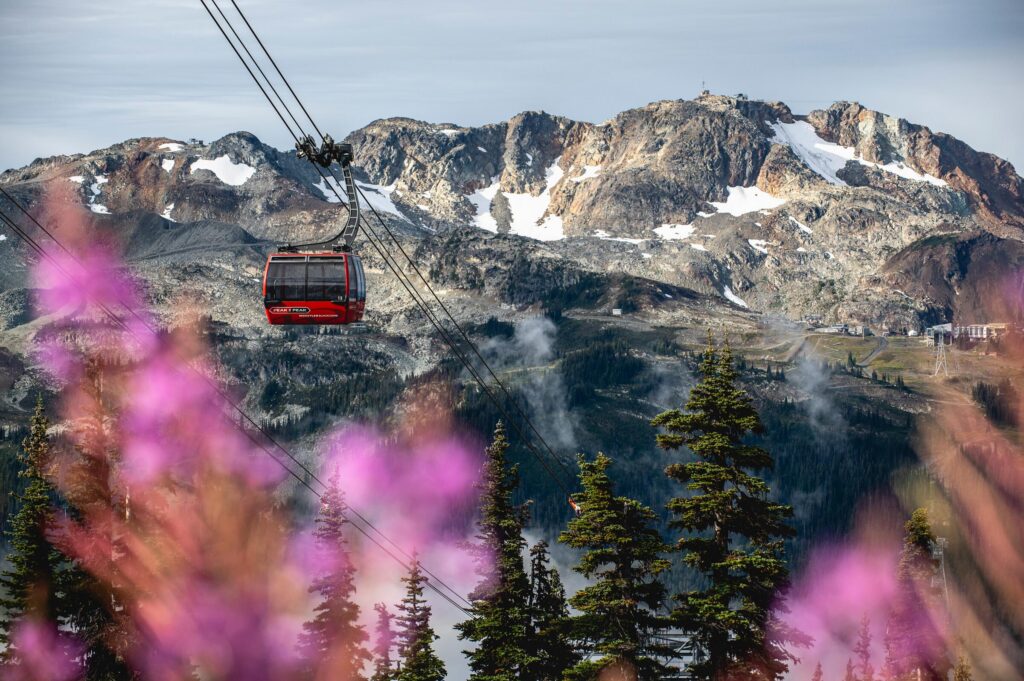
For Australian riders, the scale of Whistler is difficult to convey. The sheer amount of trails is epic, but with the amount of elevation available, the trails also vary a great deal – something that Australian bike parks struggle with. Sure, each bike park in Australia has its own essence and vibe, and yes – some locations feature some variety in riding terrain – but Whistler really hits the ball out of the park. There’s open, alpine terrain with jagged rocky outcrops, endless jump lines to hone your airtime, steep and deep trails for loam lovers, and tight rocky tech.
In fact, from both the trail design to feature flow we now experience in some of our bigger bike parks (think Maydena, Thredbo, Mystic), much of what we now consider ‘normal’ riding infrastructure traces its lineage back to Whistler.
A Global Community That Feels Instantly Familiar
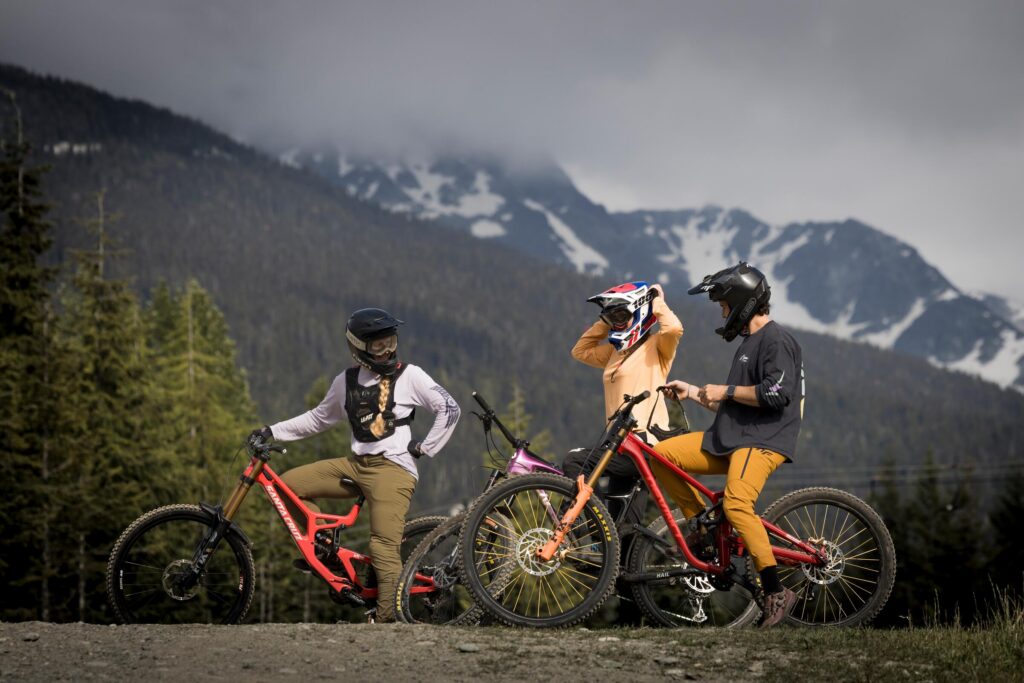
One of Whistler’s quiet strengths is that it never feels exclusive. Yes, you’ll see World Cup pros and freeride icons rolling through the Village – but you’ll also see first-timers, weekend warriors, families of groms kitted up in body armour bigger than themselves, and local riders heading out for a few post-work laps.
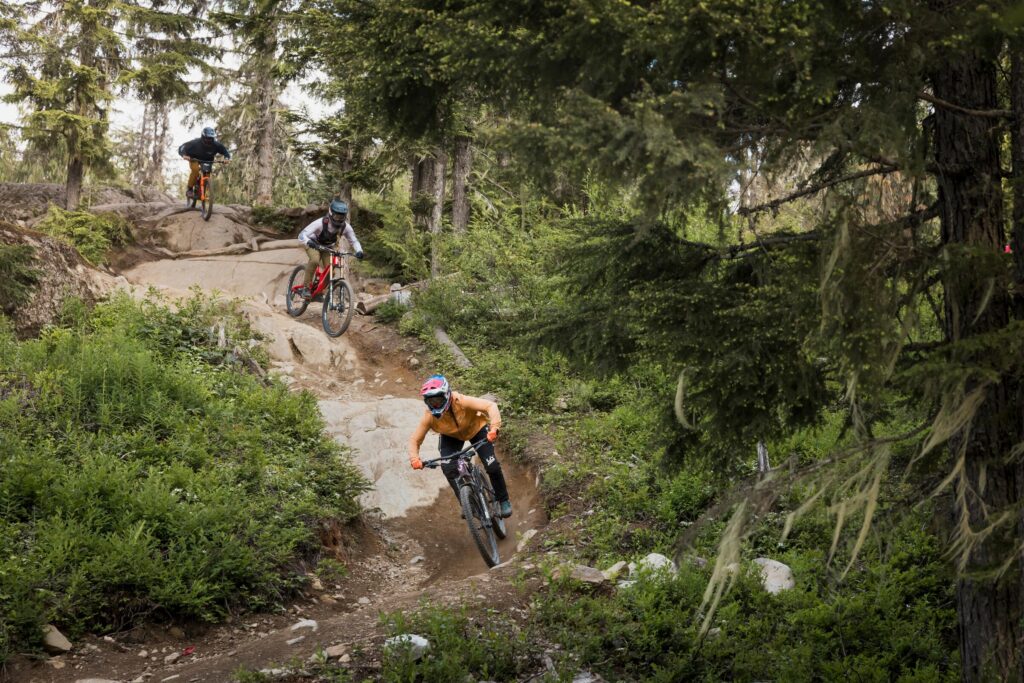
Lift lines turn into conversations that lead to post-ride beers. Riders arrive from different countries, disciplines, and backgrounds, but the common language is universal. Feeling homesick? There’s no lack of Australian and Kiwi accents dotted throughout the bike shops, bakeries and cafes in the Whistler Village.
No need to decode a new riding culture. No need to navigate unfamiliar trail etiquette. You arrive, you ride, you fit in. There are social rides happening every day on the mountain for riders of all abilities.
Easier Than Europe – And Built for Riding
For Australian riders weighing up a big overseas bike trip, Whistler occupies a sweet spot. Flights are straightforward, transfers are simple, and once you arrive, you don’t need a car. Lifts, trails, accommodation, food, bike shops are all available in the Village, which has become a rider-focused ecosystem.
Compared to hauling bikes across Europe, juggling trains, transfers, and unfamiliar trail networks, Whistler feels refreshingly direct. You land, you build your bike, you ride. Or hire a bike at one of the many bike shops in the Village.
And you keep riding. With a long season that stretches from spring through autumn, Whistler offers the flexibility to plan trips around real life, not just peak-summer windows.
Rocking Events: Get Amongst it in Whistler
Every winter, riders across the world plan their northern summers around one fixed point: Crankworx Whistler, this year running from July 24–August 4th. Beginning over 20 years ago in 2004, Crankworx is part competition, part cultural gathering, part mountain bike festival. The world’s best riders don’t just arrive to race – they come to reconnect with one of the most iconic places in the sport and enjoy some of the best riding in the world.
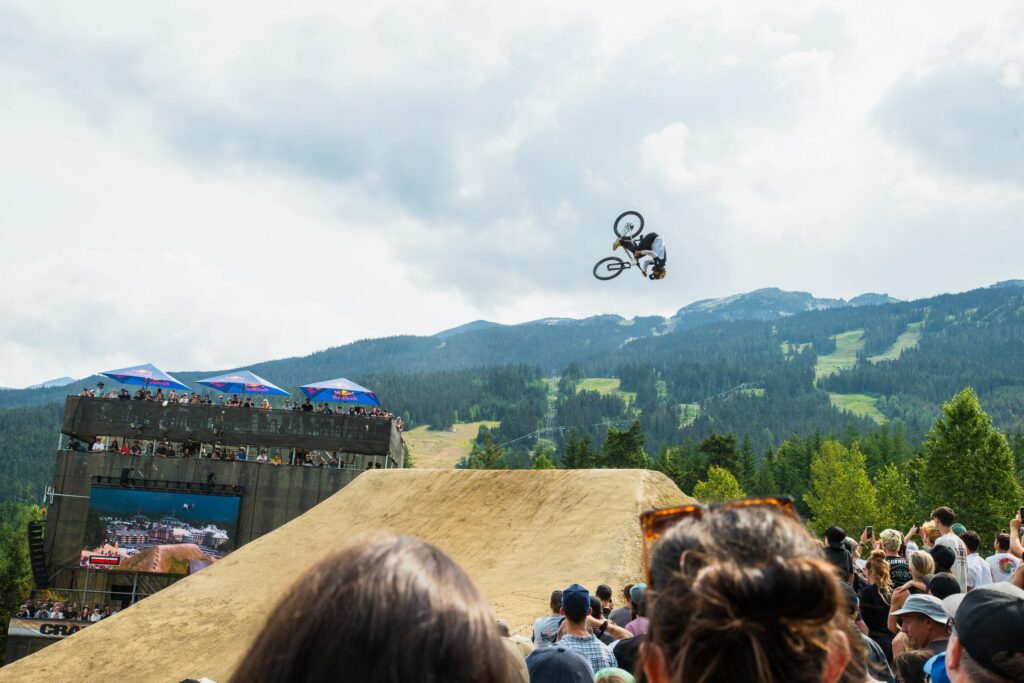
For the rest of us? It’s a great week of riding, pinning a number on at any of the participation events, getting a cowbell out and supporting the pros along the Garbanzo DH, Whip-Off Championship or Pump Track events. And don’t forget the post race beer and pizza.
In 2026, Whistler doubles down on its status at the top end of the sport, hosting a round of the UCI Mountain Bike World Cup from September 25–27. It’s a reminder that while Whistler helped define freeride culture, it remains central to elite racing, too.
Whistler – A mountain biking pilgrimage
Amongst riders who are alumni of the Whistler trail brethren, there are very few who consider it a one-and-done trip. For dedicated mountain bikers that head to Whistler, it becomes kind of like the mountain bikers’ Mecca. Most say they’ll be back, whether it be for a yearly trip, for one of Whistler’s mountain biking key events, or the light at the end of the tunnel (I am looking at you, parents of toddlers and small children).
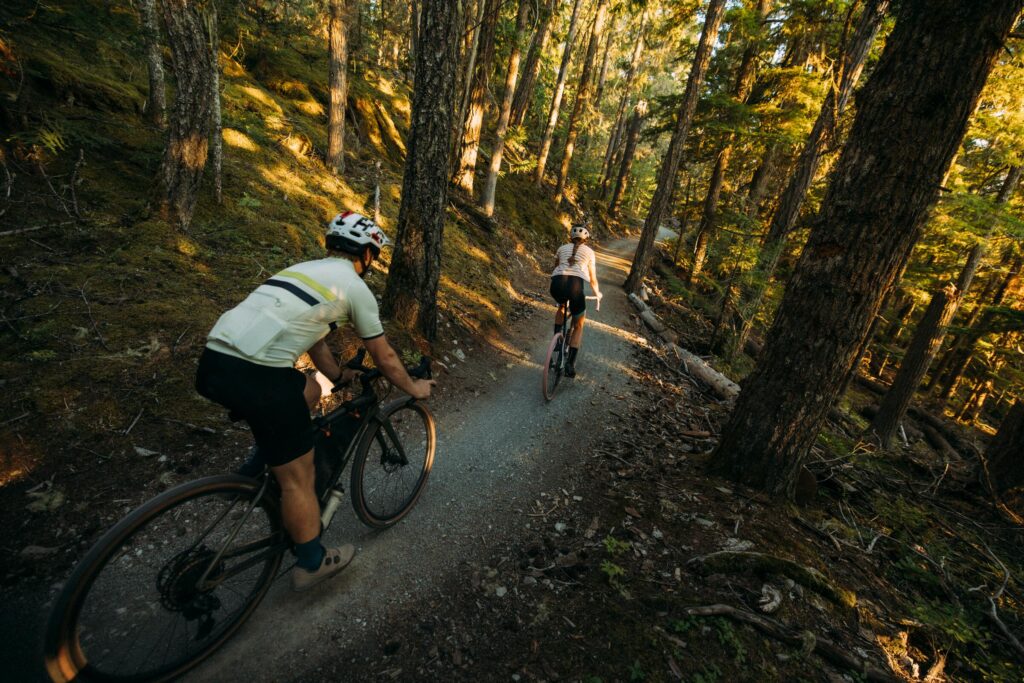
Whistler has a way of recalibrating how riders see mountain biking – what ‘good’ trails feel like, how progression should work, how a riding community can function. It reminds you why you fell in love with bikes in the first place, before the noise, before the metrics, power data, suspension chat – before the pressure to optimise every ride. The simple joy of bikes and epic trails.
And for Australian riders still saving Whistler for ‘one day’, the reality is simple: the sport is happening there right now. The trails are better than ever, the events are bigger, the access is easier and life is short.
The bucket list can wait. Whistler is ready. Learn more here.