
Warner Bros. Discovery (WBD) Sports deserves credit for taking sustainability seriously…at least on paper. Signing the UCI Climate Action Charter, renewing ISO 20121 certification, planting trees in Brazil, and embedding corporate social responsibility language into every press release all signal intent.
But in a sporting world where “greenwashing” is used as a way to justify less-than-sustainable operations, Warner Bros. most recent press release attempts to frame environmental responsibility as core business rather than a bolt-on.
The key fact here: intent and impact are not the same thing. And this is where the WHOOP UCI Mountain Bike World Series faces an uncomfortable contradiction – a sport that markets itself as deeply connected to nature continues to rely on an ever-expanding global travel circus that crisscrosses continents year after year and the rolling release of “next best” products that keep the market churning.
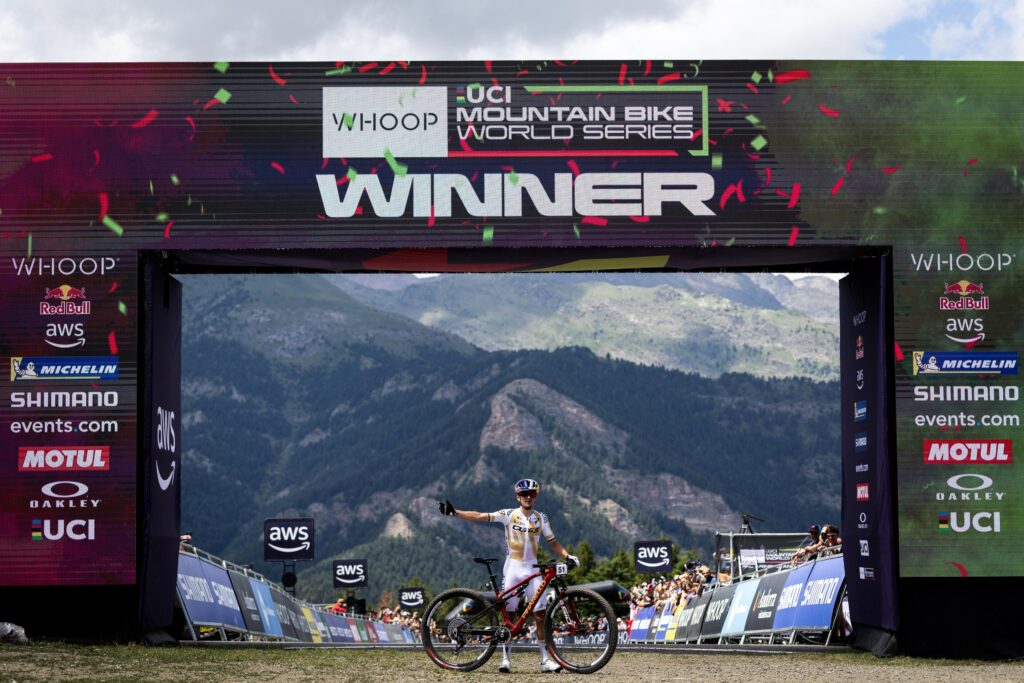
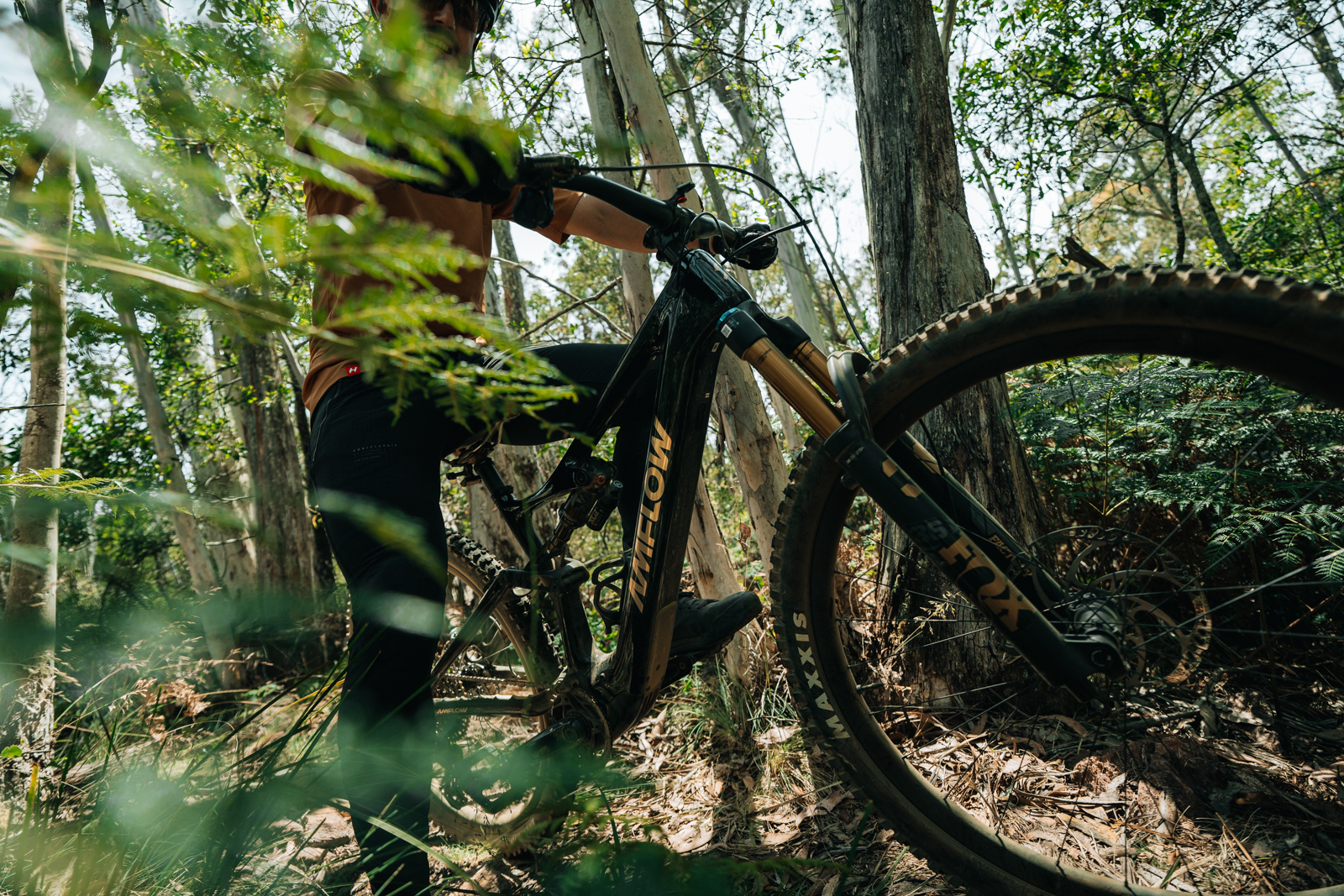
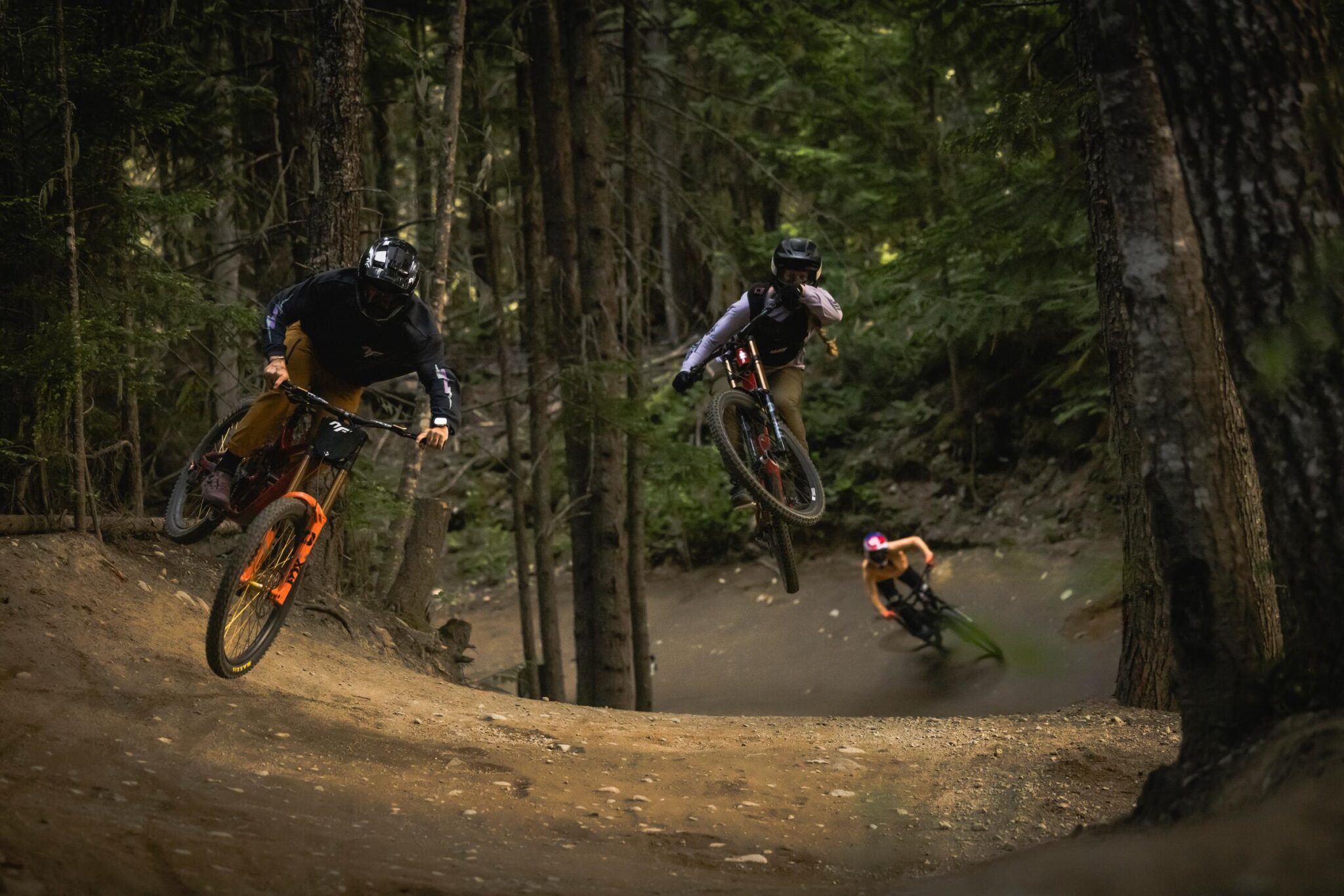
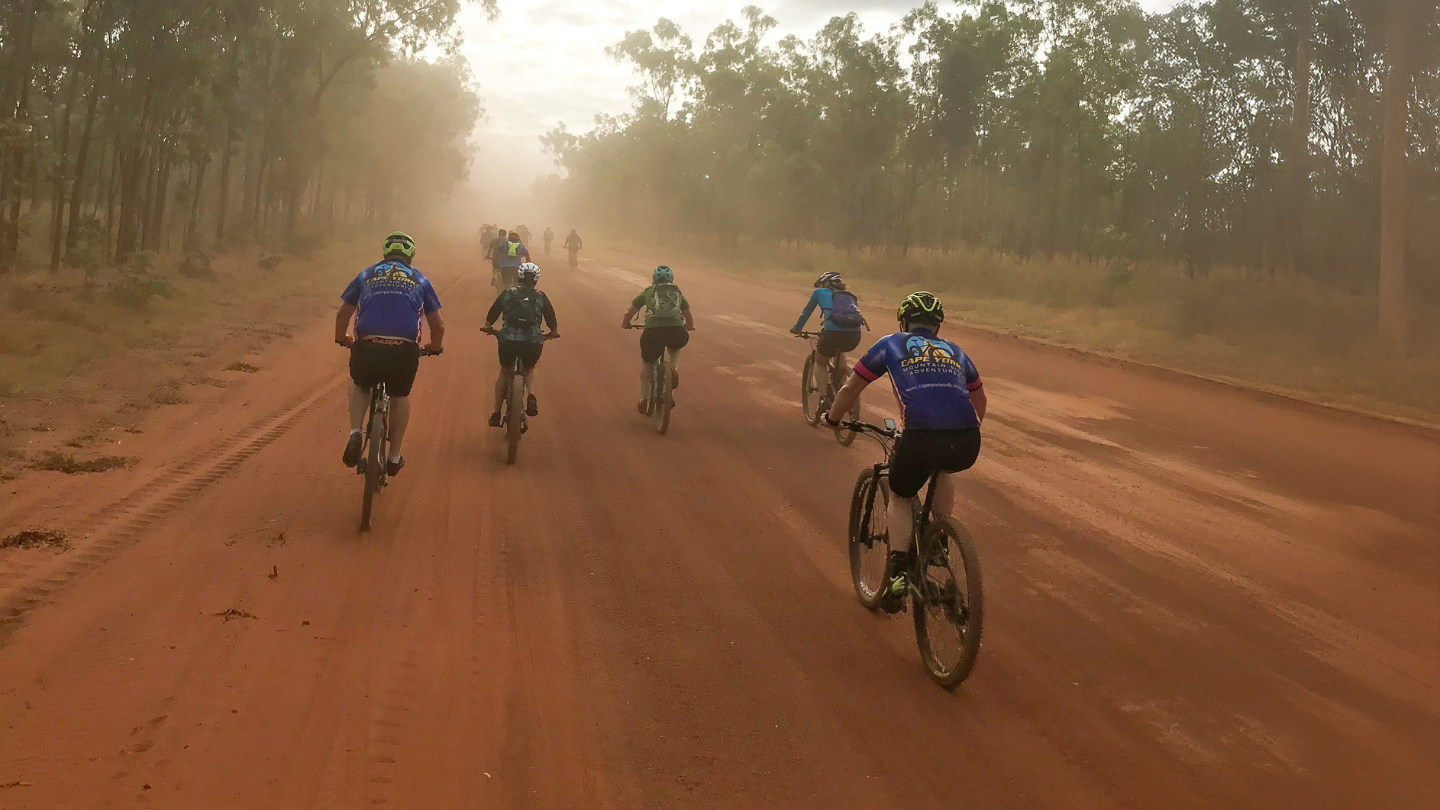
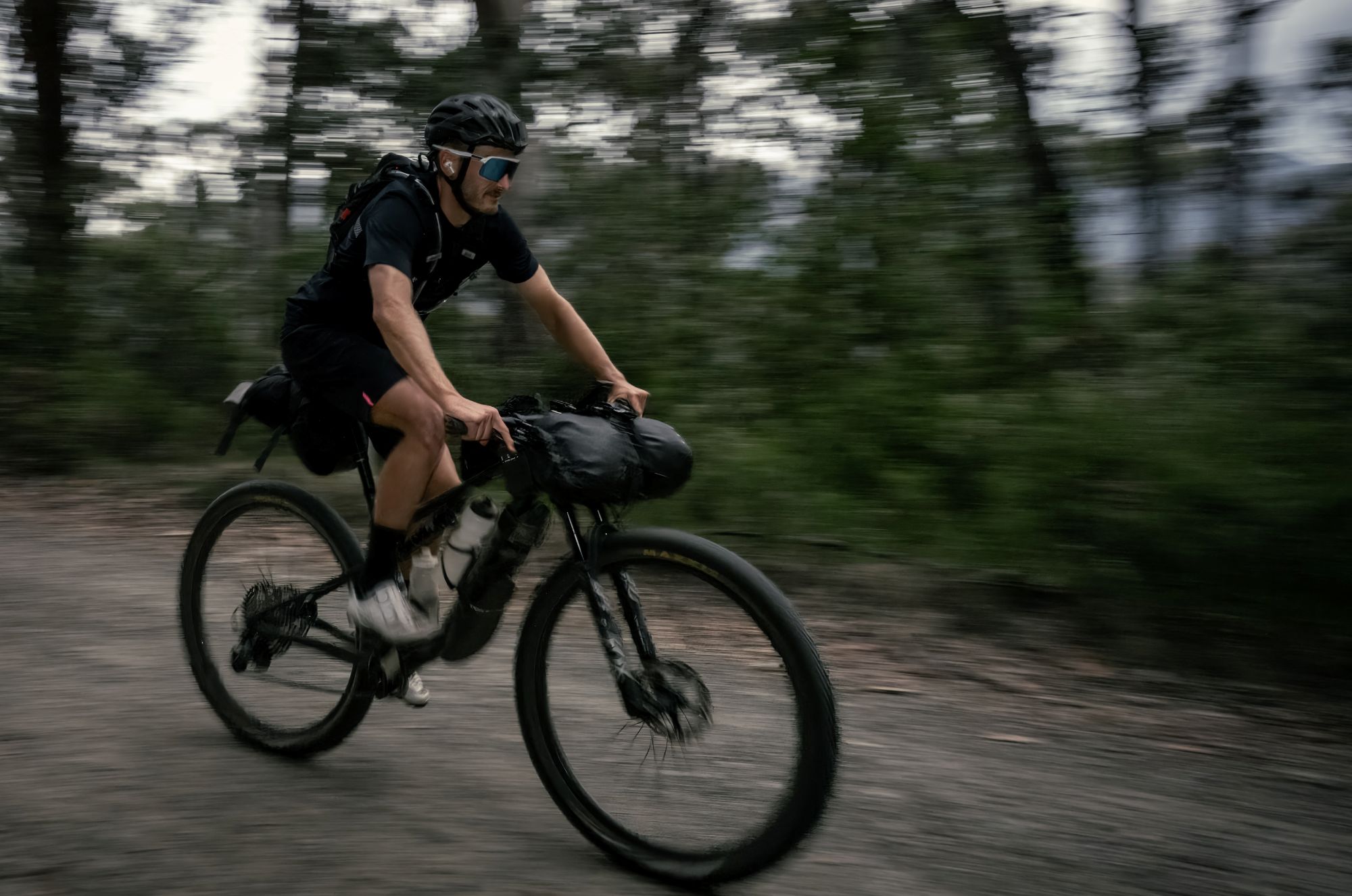
Mountain biking quite literally exists because of trails, forests, mountains, and fragile ecosystems. Without them, there is no product. That makes Warner Bros. need to take sustainability seriously not just a moral obligation, but an existential one.
WBD understands this – its messaging repeatedly acknowledges that “mountain bike and nature go hand-in-hand.” The problem is that the current World Cup model pulls riders, teams, staff, media, sponsors, broadcast crews and equipment around the world at an enormous carbon cost, most of it unavoidable air travel.
Tree planting initiatives, while positive, are a symbolic response to a structural problem. Offsetting emissions after the fact does not meaningfully address the scale of the footprint created by a truly global calendar. Next year the racing starts in Korea, followed by a cartwheel around Europe, finishing as many recent years have, with an American block.

Flying hundreds of people and tonnes of freight between Asia, Europe, the Americas and beyond is not something that can be neutralised by localised environmental projects, no matter how well intentioned or community-focused they are.
This is not a critique aimed only at WBD. Global sport as a whole is grappling with the same dilemma. But as the single global promoter, WBD Sports has more influence than most – and that influence brings responsibility. If sustainability is “integral to operations,” as Chris Ball suggests, then the conversation must eventually move beyond certificates, charters and grassroots initiatives and toward the harder questions of meaningful, structural change.
It might mean fewer rounds overall, or at least fewer long-haul jumps between them. It could involve greater investment in freight efficiencies, shared logistics, on the ground support, or even rethinking how broadcast operations are deployed on the ground (because as we all know, it’s near impossible to watch the World Cup in Australia).
For example, at the Lenzerheide World Cup 2025, there were multiple vendors giving away promotional items. While I would never turn down a cheese sample, the amount of single-use promotional plastic inflatables that instantly turn to landfill was insane. Cheap plastic keepsakes that would unlikely last the day as functional objects, yet will exist for multiple lifetimes in landfill.
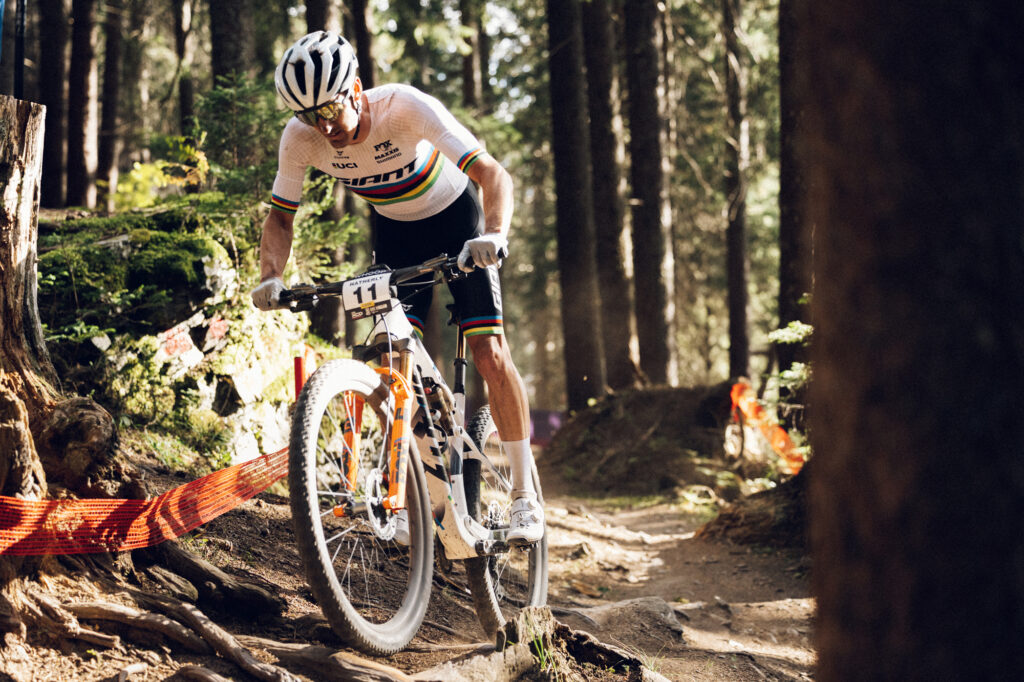
While I understand the need for sponsorship to keep the wheels of the World Cup turning, guidelines and stewardship on promotional item giveaways would be an easy way to decrease waste at large scale events.
But these sorts of decisions are complex and commercially sensitive, requiring walking a fine line between commercial interests and global ones – but these decisions are also where real emissions reductions lie. And I am also part of the problem – after all, I brought a cheese frisbee home from that World Cup.
Mountain biking is uniquely positioned to lead rather than follow on the issue of sustainability. Unlike many global sports, mountain biking’s existence is a love letter to the outdoors with riders, fans and industry participants caring deeply about the environment. That gives WBD both an opportunity and a mandate to be more ambitious, not just to mitigate impact, but actively reshape how elite off-road racing is delivered, and lead the charge in sustainability for events management. After all, the people are likely to be on their side.
For now, WBD’s sustainability efforts feel earnest but incomplete. They are necessary first steps, not end goals. If the World Cup continues to expand geographically without a parallel rethinking of its logistics and calendar structure, the gap between messaging and reality can only widen.
The question isn’t whether WBD Sports cares about sustainability. Clearly, it does. The question is whether it’s willing to make the harder, less comfortable decisions required to align a global racing series with the environmental values it publicly champions. In a sport built on dirt, trails and wild places, that alignment isn’t optional – it’s mandatory for the future of the sport more broadly.